
Radon is a naturally occurring radioactive gas that can enter homes through cracks, gaps, and openings in the foundation. Because it is invisible, odorless, and tasteless, homeowners cannot detect it without proper testing. Long-term exposure to elevated radon levels can pose serious health concerns, making awareness, testing, and reduction important parts of maintaining a healthy home.
Radon Mitigation Services in Calgary
For Calgary homeowners, Radon mitigation services in Calgary provide practical solutions for reducing elevated radon levels inside residential properties. Professional mitigation specialists assess the building, identify likely entry points, and recommend an approach based on the home's foundation, construction, and test results. A properly planned mitigation project can significantly reduce indoor radon concentrations while helping homeowners make informed decisions about their property's indoor air quality.
What Is Radon and Where Does It Come From?
Radon forms naturally when uranium in soil and rock breaks down. Since Calgary homes are built on or surrounded by soil containing naturally occurring minerals, radon can potentially enter buildings.
The gas commonly moves through:
- Cracks in concrete floors and foundations
- Floor drains and sump pits
- Gaps around plumbing and utility pipes
- Construction joints
- Crawl spaces
- Unsealed openings in foundations
- Gaps around basement windows
Once inside, radon can accumulate, particularly in lower levels that have limited ventilation.
Why Should Calgary Homeowners Test for Radon?
Radon levels can vary considerably from one property to another. Two homes located next to each other may have completely different indoor concentrations.
Testing is therefore important because:
- Radon cannot be identified by smell or appearance.
- Indoor levels can change over time.
- Basement and ground-level rooms may have greater exposure.
- New and older homes can both have elevated levels.
- Testing provides information needed to determine whether mitigation is necessary.
A long-term test is often useful because it provides a better picture of average exposure than a short snapshot. Homeowners should follow testing instructions carefully and place the detector in an appropriate occupied area.
Understanding Radon Levels
Radon concentration is commonly measured in becquerels per cubic metre (Bq/m³). In Canada, Health Canada recommends taking action to reduce radon when the annual average concentration exceeds 200 Bq/m³.
The result of a radon test should be considered in context. A single reading does not always represent the home's long-term average, which is why appropriate testing procedures matter.
If testing indicates elevated levels, homeowners can discuss the results with a qualified professional to determine the most suitable next step.
How Radon Enters a Home
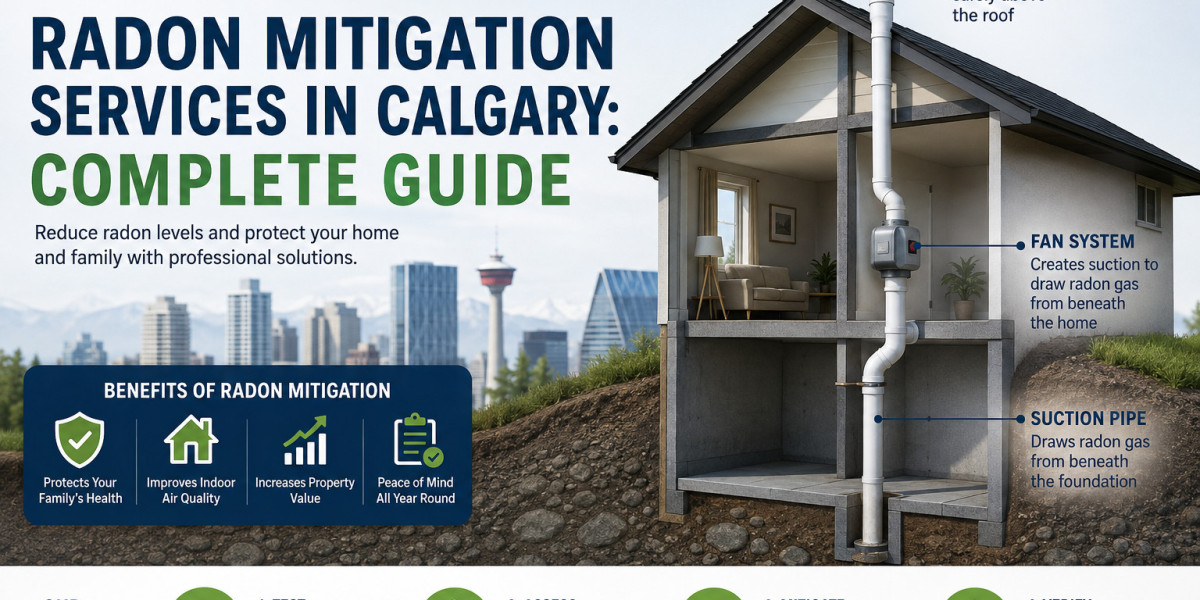
Understanding how radon gets indoors helps explain why mitigation can be effective. Soil gases can move through the ground because of natural pressure differences. Homes can also create a slight negative pressure that draws soil gas through openings in the foundation.
Common entry locations include:
- Foundation cracks
- Sump pits
- Drain systems
- Service penetrations
- Crawl spaces
- Hollow-block foundations
Sealing visible openings can help limit entry, but sealing alone is generally not considered a complete solution for significantly elevated radon concentrations. A broader approach may be required.
How Radon Mitigation Works
Professional mitigation focuses on controlling the movement of radon before it accumulates inside occupied areas.
A typical project may involve:
Assessment and Testing
The first stage is understanding the property's existing radon level and construction. Professionals may review previous test results and inspect the foundation, basement, crawl space, or drainage system.
Identifying Entry Points
The property is examined for potential pathways that allow soil gas to enter. This helps determine where mitigation equipment and pipework may be most effective.
Installing Ventilation Components
Depending on the building, a mitigation setup may use a pipe connected to the soil beneath the foundation. A fan can create negative pressure beneath the building and move radon-containing soil gas outside.
Sealing Relevant Openings
Certain cracks, joints, and openings can be sealed as part of the overall strategy. This can complement active soil depressurization and help improve system performance.
Post-Mitigation Testing
Testing after installation is important. It helps confirm whether indoor radon concentrations have been reduced and whether additional adjustments may be necessary.
Factors That Affect Mitigation Requirements
Every home is different, so mitigation should not be approached as a one-size-fits-all installation.
Important factors can include:
- Foundation design
- Basement configuration
- Crawl-space construction
- Soil characteristics
- Drainage systems
- Existing ventilation
- Location of radon entry points
- Measured radon concentration
Professional assessment is particularly useful when a home has multiple foundation types or unusual construction features.
Benefits of Professional Radon Reduction
Taking action when elevated radon is identified can provide several practical benefits.
Improved Indoor Air Quality
Reducing radon concentrations can improve the overall quality of the air occupants breathe.
Greater Peace of Mind
Knowing that elevated levels have been addressed can give homeowners greater confidence about their indoor environment.
Property Protection
A professionally installed mitigation setup can become an important part of maintaining a healthier home.
Ongoing Monitoring
Follow-up testing allows homeowners to check whether radon levels remain controlled over time.
Choosing a Radon Professional
Homeowners should take time to evaluate a mitigation provider before hiring one. Experience with local housing conditions and appropriate installation practices can make a meaningful difference.
Consider asking about:
- Previous residential mitigation experience
- Professional training or certification
- Testing and post-installation verification
- The proposed mitigation approach
- Equipment and fan specifications
- Warranty or service information
- Written estimates and project details
It is also helpful to understand what the quoted service includes before work begins.
Common Mistakes to Avoid
Radon mitigation is most effective when it is based on proper testing and an understanding of the building.
Avoid these common mistakes:
- Assuming only older homes have radon
- Relying on smell or visible signs
- Treating one short test as a complete assessment
- Sealing cracks without considering the entire building
- Installing equipment without understanding the foundation
- Skipping post-installation testing
- Ignoring future monitoring
Taking a measured, evidence-based approach can help homeowners avoid unnecessary work while ensuring elevated levels are properly addressed.
When Should You Consider Mitigation?
Homeowners should consider professional advice when testing reveals elevated radon concentrations. It can also be useful to seek guidance when buying or renovating a property, particularly if the basement or foundation is being modified.
Testing before and after major changes can help establish whether indoor radon levels have changed.
Maintaining a Radon Mitigation Setup
Installing equipment is not necessarily the end of the process. Homeowners should periodically check that the system is operating correctly and arrange follow-up radon testing.
Simple maintenance may include:
- Checking the system indicator
- Keeping exhaust areas unobstructed
- Listening for unusual fan noises
- Watching for visible pipe or connection damage
- Retesting radon levels periodically
If the system appears to malfunction, professional inspection is recommended.
Final Thoughts
Radon is a hidden indoor air-quality concern that Calgary homeowners should not overlook. Since the gas cannot be detected without testing, understanding the property's radon level is the first important step. When elevated concentrations are found, a carefully designed radon reduction system can provide an effective way to lower indoor radon and improve confidence in the home's environment.
The right solution depends on the property's construction, foundation, soil conditions, and test results. Professional assessment, appropriate installation, and follow-up testing can work together to create a practical long-term approach. For homeowners dealing with elevated readings, a properly designed radon mitigation system can help control radon entry and reduce indoor concentrations.