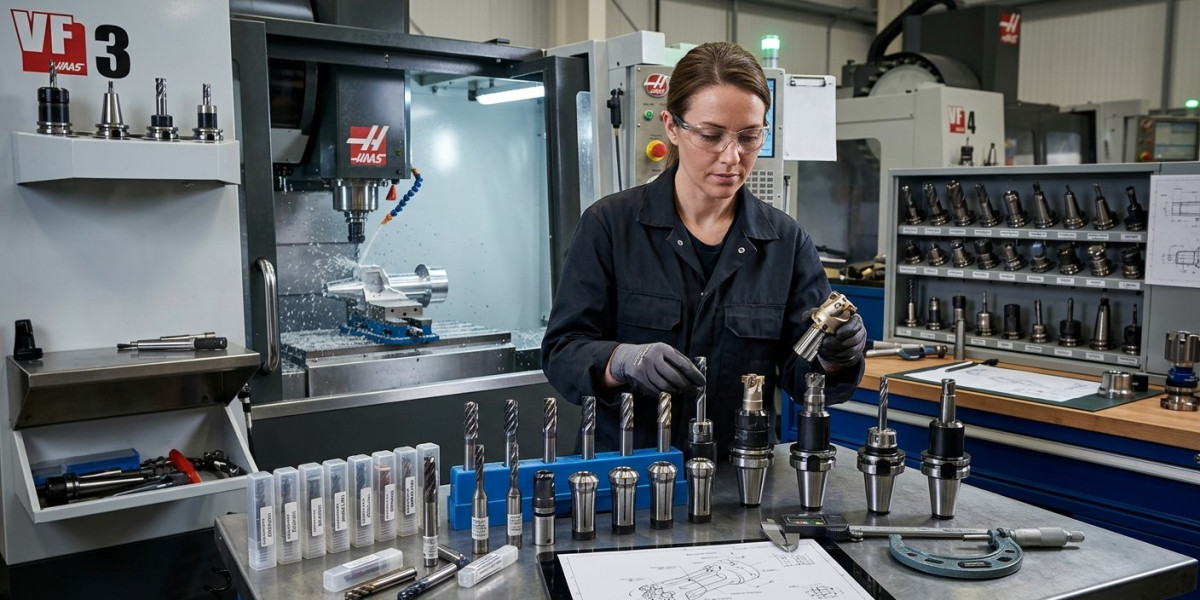

Precision machining requires the right combination of equipment, tooling, machining parameters, and inspection methods. Among these, milling tools play a major role in determining the accuracy, surface finish, productivity, and overall quality of manufactured components. Choosing an unsuitable milling cutter can result in excessive tool wear, vibration, poor finishes, dimensional errors, and unnecessary production costs.
For businesses searching for an Industrial Tools Supplier in Dubai, understanding how to select milling tools according to the application is essential. Khokhawala Trading LLC, an Industrial Tools Supplier in Dubai, provides industrial and engineering tools for machining, manufacturing, maintenance, fabrication, and workshop applications.
This guide explains the major types of milling tools, the factors to consider when selecting them, and how the right tooling strategy can improve precision machining performance.
What Are Milling Tools?
Milling tools are rotary cutting tools used with milling machines and CNC machining centers to remove material from a workpiece. Depending on their geometry, milling cutters can perform a variety of operations, including:
- Face milling
- Slotting
- Pocketing
- Profiling
- Contouring
- Chamfering
- Roughing
- Finishing
- Thread milling
Milling tools are available in different diameters, flute configurations, coatings, geometries, and materials. The best option depends on the workpiece material, machining operation, machine capability, and required dimensional accuracy.
Why Choosing the Right Milling Tool Matters
The correct milling tool can have a direct impact on machining performance. A properly selected cutter can improve material removal while maintaining dimensional consistency and surface quality.
The right tool can help:
- Improve machining accuracy
- Increase tool life
- Reduce vibration
- Improve surface finish
- Increase productivity
- Reduce machining time
- Minimize tool breakage
- Reduce production waste
- Improve overall process stability
In precision machining, even relatively small tooling errors can affect the final component. Tool selection should therefore be considered part of the overall manufacturing process rather than simply a purchasing decision.
Common Types of Milling Tools
Understanding the main types of milling cutters is the first step toward selecting the appropriate tool.
1. End Mills
End mills are among the most widely used industrial cutting tools in milling operations. They can cut with their end and, depending on their design, their side edges.
Common end mill types include:
- Square end mills
- Ball nose end mills
- Corner-radius end mills
- Roughing end mills
- Multi-flute end mills
Square end mills are commonly used for slots, pockets, shoulders, and general profiling.
Ball nose end mills are frequently used for curved surfaces and 3D machining.
Corner-radius end mills provide a rounded transition between the cutting edge and corner, which can improve tool strength and reduce stress concentration.
2. Face Mills
Face mills are designed primarily for producing flat surfaces efficiently.
They are often used during the initial machining stages to remove material from the top surface of a workpiece.
Face mills can use replaceable carbide inserts, allowing manufacturers to select different insert grades and geometries according to the material and operation.
3. Roughing Mills
Roughing end mills are designed for high material removal rates. Their cutting geometry helps break chips into smaller segments, which can support efficient rough machining.
They are useful when large amounts of material need to be removed before a finishing operation.
4. Ball Nose Mills
Ball nose cutters have a rounded cutting end and are particularly useful for three-dimensional machining.
They are commonly used for:
- Molds
- Dies
- Curved components
- Contoured surfaces
- Complex CNC components
The tool diameter and step-over should be selected carefully to achieve the desired surface finish.
5. Chamfer Mills
Chamfer tools are used to create angled edges on components.
Chamfering can improve the appearance of a finished component, remove sharp edges, and prepare parts for assembly.
Consider the Workpiece Material
One of the most important factors when selecting milling tools is the material being machined.
Different materials have different cutting characteristics.
Aluminum
Aluminum is relatively soft and can generate long chips. Milling tools with suitable flute geometry and chip evacuation can help reduce chip buildup.
Stainless Steel
Stainless steel can generate considerable heat and may work-harden under unsuitable machining conditions. Tool geometry, coating, cutting speed, and coolant strategy are important considerations.
Cast Iron
Cast iron is abrasive and can generate fine chips. Tool grade and edge strength should be selected according to the specific cast iron being machined.
Hardened Steel
Hardened materials may require specialized carbide tooling or other appropriate cutting solutions designed for the hardness level.
Plastics
Plastics require tooling that can minimize melting, deformation, and chip-related problems.
Selecting a milling tool specifically designed for the workpiece material can improve performance and reduce premature wear.
Carbide Milling Tools for Precision Applications
Carbide cutting tools are widely used in precision machining because carbide offers high hardness and wear resistance.
Carbide end mills can be suitable for demanding CNC applications where appropriate machine rigidity and cutting parameters are available.
Advantages can include:
- High wear resistance
- Good dimensional consistency
- High-temperature resistance
- Suitable for higher cutting speeds in appropriate applications
- Long service life under suitable conditions
However, carbide tools can be relatively brittle. Excessive vibration, poor workholding, machine instability, or incorrect cutting parameters can cause chipping or breakage.
Selecting the Correct Number of Flutes
The number of flutes on an end mill affects chip space, feed capability, and cutting behavior.
Two-Flute Tools
Two-flute cutters provide relatively large chip spaces and can be useful for materials that generate larger chips, including many aluminum applications.
Three-Flute Tools
Three-flute cutters can provide a balance between chip evacuation and productivity.
Four or More Flutes
Higher-flute-count tools can provide more cutting edges and may be useful for harder materials and finishing operations.
The correct flute count depends on the workpiece material, cutting conditions, machine capability, and desired result.
Choosing the Right Tool Diameter
Tool diameter affects rigidity, cutting speed, accessibility, and material removal capability.
A larger cutter generally provides greater rigidity and can support heavier cutting operations. However, smaller cutters are necessary for narrow slots, small features, and complex geometries.
When selecting diameter, consider:
- Feature size
- Pocket dimensions
- Required corner radius
- Tool reach
- Machine spindle capability
- Workpiece geometry
The tool should be large enough to provide adequate rigidity while still allowing access to the required feature.
Consider Tool Coatings
Modern milling tools are available with various coatings designed to improve wear resistance and cutting performance.
Depending on the application, coatings can help:
- Reduce friction
- Improve heat resistance
- Increase wear resistance
- Extend tool life
Coating selection should be based on the workpiece material and machining application rather than assuming that one coating is suitable for every job.
Tool Length and Rigidity
Tool length is another important factor in precision machining.
Long tools provide greater reach but can be more susceptible to deflection and vibration.
Whenever possible, use the shortest practical tool length for the required machining operation.
Excessive tool stick-out can result in:
- Chatter
- Poor surface finish
- Dimensional inaccuracies
- Uneven tool wear
- Tool breakage
Good workholding and appropriate tool holders are equally important for maintaining machining stability.
Select the Right Tool Holder
The cutting tool and tool holder work together as a system.
Common tool-holding solutions include:
- Collet chucks
- End mill holders
- Hydraulic holders
- Shrink-fit holders
- High-precision tool holders
A high-quality holder can help reduce runout and improve overall tool stability.
Before selecting a tool holder, verify compatibility with the CNC machine spindle and cutting tool shank.
Cutting Speed and Feed Rate
Even the best milling tool can perform poorly if it is used with inappropriate machining parameters.
Important parameters include:
- Spindle speed
- Feed rate
- Depth of cut
- Width of cut
- Cutting speed
- Coolant flow
Manufacturers should follow tooling recommendations and adjust parameters according to the specific machine, material, tool geometry, and machining operation.
Running a cutter too fast can cause excessive heat and wear, while an unsuitable feed rate can lead to poor cutting performance or tool damage.
Roughing vs Finishing Tools
Precision machining often involves separate roughing and finishing stages.
Roughing
The primary objective is to remove material efficiently.
Roughing tools are designed to withstand heavier cutting conditions and higher material removal rates.
Finishing
The objective is to achieve the final dimensions and surface quality.
Finishing tools generally use cutting geometries designed for smoother cutting and improved surface finish.
Using specialized tools for each stage can improve both productivity and final component quality.
The Importance of Coolant
Coolant can play an important role in milling, particularly when machining materials that generate significant heat.
A suitable coolant strategy can help:
- Control cutting temperature
- Reduce friction
- Improve chip evacuation
- Protect the cutting edge
- Improve surface finish
The appropriate coolant method depends on the tool, material, machine, and machining operation.
Some modern tooling strategies may also use minimum-quantity lubrication or dry machining where appropriate.
Precision Measuring Tools After Milling
Selecting the correct cutter is only one part of precision machining. The finished component must also be inspected.
Precision measuring tools such as:
- Digital calipers
- Micrometers
- Dial indicators
- Bore gauges
- Height gauges
- Depth gauges
can be used to verify dimensional accuracy.
For businesses searching for a Precision Measuring Tools Supplier in Dubai, selecting measurement equipment according to the component tolerance and inspection requirements is essential.
Regular measurement can also help identify tool wear before it causes excessive production defects.
Common Milling Problems and Solutions
Excessive Chatter
Chatter may result from:
- Excessive tool stick-out
- Weak workholding
- Incorrect cutting parameters
- Machine vibration
- Unsuitable tool geometry
Reducing tool overhang and improving workholding can help stabilize the operation.
Poor Surface Finish
Poor surface quality can be caused by:
- Worn cutting edges
- Incorrect feed
- Excessive vibration
- Incorrect tool selection
- Inadequate machining conditions
Short Tool Life
Premature tool wear may result from:
- Excessive cutting speed
- Excessive cutting forces
- Incorrect coating
- Poor coolant management
- Unsuitable tool material
Tool Breakage
Tool breakage can occur when cutting conditions exceed the tool's capability or when the machine setup lacks sufficient rigidity.
How to Build an Effective Milling Tool Inventory
A modern workshop should maintain a practical range of milling tools based on its common machining requirements.
A basic inventory may include:
- General-purpose end mills
- Ball nose cutters
- Roughing end mills
- Face mills
- Chamfer tools
- Carbide milling tools
- Replacement inserts
- Tool holders
- Collets
The exact inventory should be determined by the materials, component sizes, machines, and machining operations performed by the workshop.
Choosing a Reliable Industrial Tools Supplier
Selecting a reliable supplier is important when purchasing machining and engineering tools.
Businesses searching for an Industrial Tools Supplier UAE should consider:
- Product quality
- Technical specifications
- Tool availability
- Application suitability
- Product range
- Industry experience
- Customer support
Companies looking for an Engineering Tools Supplier in Dubai may benefit from working with a supplier that can provide a range of machining, cutting, measuring, hydraulic, threading, and workshop tools.
Khokhawala Trading LLC serves businesses looking for industrial and engineering tooling solutions for machining, manufacturing, maintenance, fabrication, and workshop applications.
Conclusion
Selecting the best milling tools for precision machining requires careful consideration of the workpiece material, machining operation, tool diameter, flute count, tool material, coating, tool length, machine capability, workholding, and cutting parameters.
End mills, face mills, roughing cutters, ball nose mills, and chamfer tools each have specific applications. Carbide cutting tools can provide excellent wear resistance and performance for many demanding machining operations when used under appropriate conditions.
Precision machining also depends on reliable tool holding, suitable coolant strategies, regular tool inspection, and accurate precision measuring tools to verify finished components.
For businesses searching for an Industrial Tools Supplier in Dubai, Industrial Tools Supplier UAE, Engineering Tools Supplier in Dubai, or Precision Measuring Tools Supplier in Dubai, Khokhawala Trading LLC provides industrial and engineering tooling solutions for a variety of professional applications.
By selecting milling tools according to the actual machining requirements rather than simply choosing based on price or availability, workshops can improve productivity, extend tool life, reduce machining problems, and achieve more consistent and accurate finished components.