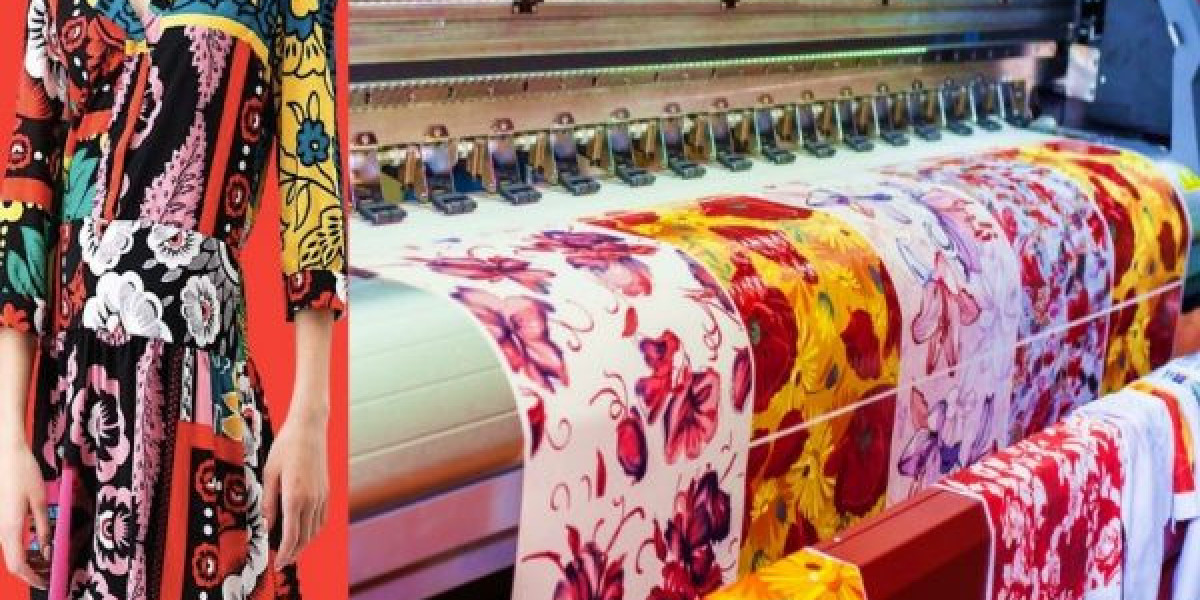

Digital printing on fabric is a textile decoration process that uses specialized inkjet printers to transfer digital artwork directly onto fabric. Instead of preparing separate screens or engraved rollers, the printer reads an electronic design file and applies controlled amounts of textile ink to create the image. This approach can reproduce detailed artwork, photographs, logos, gradients, and repeating patterns with a high level of design flexibility.
Today, Digital printing on fabric is used across fashion, home textiles, sportswear, advertising, interior decoration, and customized products. It is particularly useful when a manufacturer needs samples, short production runs, personalized designs, or complex artwork. However, successful results are not determined by the printer alone. Fabric composition, ink chemistry, pretreatment, color management, fixation, and finishing all influence the quality and durability of the final textile.
What Is Digital Printing on Fabric?
Traditional textile printing is an inkjet-based process in which textile-compatible inks are deposited onto a fabric according to a digital image. The printer's software converts the artwork into instructions that control the movement of the print heads and the amount of ink released.
This makes it possible to change artwork without producing new physical screens. A manufacturer can modify colors, adjust pattern sizes, replace images, or create personalized versions of a design using the same basic digital workflow.
The term "digital printing" does not describe just one printing method. Different fabrics require different ink technologies. For instance, polyester is commonly associated with dye sublimation, while cotton may be printed using reactive dyes or pigment inks. Silk and wool can be suitable for acid dye printing. Choosing the correct combination of fabric and ink is essential.
How Does Digital Fabric Printing Work?
1. Preparing the Design
The process starts with a digital artwork file. Designers may create patterns using textile design software or prepare photographs, illustrations, logos, and graphics using image-editing applications.
The file should have sufficient resolution for its intended print size. A low-resolution image that is enlarged significantly may produce blurred edges or visible pixelation.
For repeating textile patterns, designers must also check the repeat carefully. Incorrect alignment can create noticeable breaks or unwanted lines when the pattern is printed across a large roll of fabric.
2. Selecting the Fabric
Fabric selection should be based on the final product and the printing technology.
Cotton, linen, viscose, and other cellulose-based materials are commonly used with reactive or pigment systems. Polyester is frequently used for dye sublimation because the dye can become incorporated into the polyester fiber during heating.
Silk, wool, and certain nylon fabrics can work with acid dyes. Blended fabrics may require additional testing because each fiber can respond differently to the same printing process.
Fabric weight, weave, surface texture, absorbency, stretch, and color can also affect the appearance of a printed design.
3. Pretreating the Textile
Some printing processes require chemical pretreatment before the fabric enters the printer. Pretreatment helps regulate how ink interacts with the fibers and can influence color development and image sharpness.
Uniform coverage is important. Uneven pretreatment may cause differences in color density or print definition across the textile.
The material should also be clean, dry, smooth, and properly aligned. Wrinkles or inconsistent fabric tension can lead to distorted patterns.
4. Printing the Artwork
After preparation, the fabric moves through the digital printer. Specialized print heads deposit small droplets of ink according to the digital artwork.
The printer can operate at different resolutions and speeds. A high-quality setting may produce greater detail but can require more production time. Manufacturers therefore select settings according to the intended use, fabric type, design complexity, and required output.
5. Fixing the Print
Printing is often followed by a fixation stage. The exact method depends on the ink system.
Some inks require heat curing, while dye-based systems may require steaming. Reactive printing commonly involves washing after fixation to remove unfixed dye and processing chemicals.
The textile may then be dried and finished. Finishing can affect softness, appearance, shrinkage, dimensional stability, and other performance characteristics.
Major Types of Digital Textile Printing
Reactive Printing
Reactive digital printing is widely used for cotton and other cellulose-based fabrics. Reactive dyes chemically bond with suitable fibers during fixation.
The method can provide bright colors and good wash performance when the fabric is correctly pretreated, printed, steamed, washed, and dried.
Its multi-stage process means that production control is important. Incorrect fixation or insufficient washing can affect the appearance and performance of the finished textile.
Pigment Printing
Pigment printing uses colored particles that remain on the textile with the help of a binder. It can be applied to various types of fabrics, making it a versatile option.
Proper curing is essential because the binder needs to develop the required resistance to washing and rubbing. The process can be attractive for applications where a relatively broad range of textile fibers needs to be handled.
Dye Sublimation
Dye sublimation is mainly used with polyester fabrics. During heating, the dye transfers into the polyester structure rather than simply remaining as a surface coating.
It is commonly used for sportswear, flags, banners, promotional textiles, and event displays. The process is well suited to colorful graphics and detailed designs.
Acid Dye Printing
Acid dye printing is commonly associated with silk, wool, and certain nylon materials. It can produce strong, detailed colors on suitable fabrics.
The process requires appropriate fixation and washing to achieve the desired result. It is often selected for specialty textile applications where color quality and fabric appearance are important.
Benefits of Digital Printing on Fabric
Detailed Artwork
One of the major advantages of digital printing is its ability to reproduce complicated designs. Photographs, gradients, fine lines, illustrations, and multicolor artwork can be printed without preparing a separate screen for every design element.
Customization
Digital files can be changed quickly. Businesses can create personalized garments featuring different names, numbers, logos, images, or other variable information.
For example, a sportswear company can produce shirts with different player names and numbers while maintaining the same overall design.
Efficient Sampling
Digital printing makes it practical to produce physical samples before committing to larger production quantities. Designers can check color, pattern scale, image sharpness, and fabric appearance on the actual material.
This can reduce the risk of producing a large quantity of an unsuitable design.
Short Production Runs
Digital printing can be practical for smaller quantities because it does not require the same type of physical setup associated with some conventional printing processes.
This makes it useful for independent designers, limited collections, prototypes, personalized products, and small businesses.
Design Flexibility
Manufacturers can switch between digital designs without creating new physical screens. This is helpful when a business produces many different patterns or frequently updates its product range.
Applications of Digital Fabric Printing
Fashion and Apparel
Digitally printed fabric is used for dresses, shirts, skirts, jackets, scarves, swimwear, and other garments. Designers can use custom illustrations, photographs, and intricate patterns to create distinctive collections.
Sportswear
Polyester sportswear is often decorated using dye sublimation. Teams can combine colors, logos, player names, numbers, and detailed graphics within one design.
Home Textiles
Curtains, cushions, bedding, table linens, upholstery, and decorative fabrics can all feature digitally printed artwork. Customized patterns can be produced for both residential and commercial interiors.
Advertising and Events
Digital textile printing is also used for flags, banners, exhibition graphics, backdrops, and promotional displays. Designs can be adapted for different campaigns without changing physical printing equipment.
Customized Products
Small businesses and artists can print original artwork onto fabric for bags, scarves, wall decorations, accessories, and limited-edition products.
Practical Benefits and Key Insights
For businesses, the most important advantage is flexibility. Digital printing allows a design to move from a computer file to a physical sample without creating traditional printing screens.
However, the best results come from treating the entire production process as one system. A high-quality printer cannot compensate for unsuitable fabric or incorrect ink.
Color testing is particularly important. A design that looks correct on a monitor may appear different on fabric because the textile surface, ink chemistry, lighting, and color-management settings affect the final appearance.
It is also useful to maintain production records. Details such as fabric specifications, ink type, pretreatment settings, curing conditions, and printer configuration can help reproduce successful results in future orders.
Common Challenges and Considerations
Fabric and Ink Compatibility
Using an unsuitable ink with a particular textile can result in weak colors, bleeding, poor adhesion, or inadequate durability. Always identify the fiber composition before selecting the printing process.
Color Accuracy
Screen colors are not a perfect representation of printed textile colors. For important brand colors or repeat orders, a physical proof should be approved before bulk production.
Durability
Different products have different durability requirements. Clothing may need resistance to repeated washing and rubbing, while outdoor textiles may need resistance to sunlight and moisture.
Testing should reflect the conditions the final product is expected to experience.
Production Cost
Digital printing is not always cheaper than traditional textile printing. It can be highly useful for short runs and customized work, while conventional methods may have cost advantages for some large-volume orders.
A realistic cost calculation should include fabric, ink, pretreatment, labor, energy, printing time, fixation, washing, drying, finishing, and waste.
Frequently Asked Questions
1. What is digital printing on fabric?
Digital printing on fabric is a process that uses specialized inkjet equipment to apply computer-generated artwork directly to textiles using suitable textile inks.
2. Which fabrics can be digitally printed?
Many fabrics can be digitally printed, including cotton, polyester, linen, viscose, silk, wool, nylon, and selected blends. The appropriate ink technology depends on the fiber composition.
3. Is digital fabric printing suitable for photographs?
Yes. Digital textile printers can reproduce photographs, gradients, fine details, and complex illustrations when the artwork, fabric, ink, and printer settings are properly matched.
4. How durable is digitally printed fabric?
Durability varies according to the ink system, fabric, fixation process, finishing method, and intended use. Properly processed textiles can provide good resistance to washing, rubbing, or environmental exposure depending on the application.
5. Is digital printing better than screen printing?
Neither method is universally better. Digital printing offers strong advantages for detailed designs, customization, sampling, and shorter runs. Screen printing may be more economical for certain high-volume orders.
Conclusion
Digital printing on fabric provides a flexible method for transferring detailed digital artwork onto textiles. Its ability to handle complex designs, customization, samples, and smaller production runs has made it useful across fashion, sportswear, home furnishings, advertising, and specialty textile products.
The printing machine is only one part of the process. Fabric selection, ink compatibility, pretreatment, artwork quality, color management, fixation, and finishing all contribute to the final result.
For reliable production, businesses should test new fabric and ink combinations before beginning a large order. Physical samples provide an opportunity to evaluate color, sharpness, fabric feel, shrinkage, and durability.
When the material and printing technology are correctly matched, digital fabric printing can deliver detailed and consistent designs while giving manufacturers and designers greater control over customization and production.