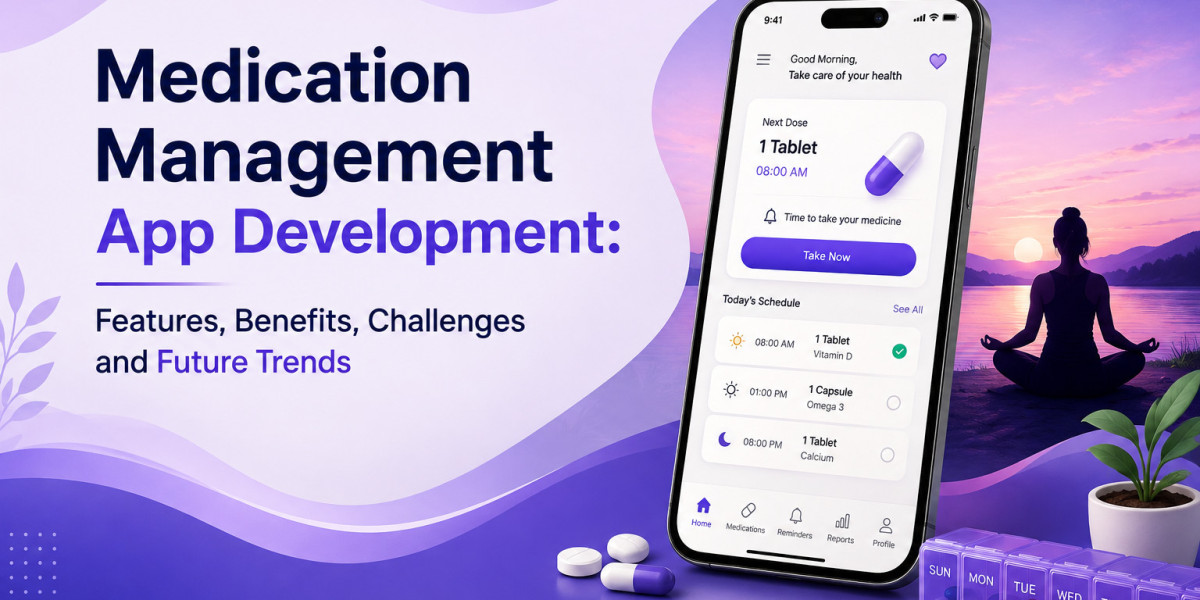

Managing medications correctly can be challenging, particularly for people who take multiple medicines at different times of the day. Missed doses, incorrect schedules, prescription changes, and difficulty tracking medication history can create unnecessary risks and inconvenience. Digital healthcare technology is helping address these challenges through dedicated medication management applications.
With the growing adoption of smartphones and connected healthcare solutions, businesses and healthcare organizations are increasingly investing in medication management app development. These applications can help users organize medication schedules, receive reminders, monitor adherence, manage prescription information, and communicate relevant information with caregivers or healthcare professionals.
However, every healthcare organization has different workflows and requirements. A pharmacy may need medication refill management, while a healthcare provider may require patient monitoring and integration with existing systems. This is why custom medication management app development is becoming an attractive approach for businesses seeking a solution designed around their specific objectives.
What Is a Medication Management App?
A medication management app is a digital application designed to help users organize and monitor their medication routines. Depending on its purpose, the platform can provide reminders, medication schedules, prescription records, refill notifications, and adherence tracking.
For healthcare businesses, these applications can also provide administrative dashboards and communication features that allow authorized professionals or caregivers to monitor relevant information.
The goal is not to replace medical professionals but to support patients in following medication instructions and maintaining better organization.
Why Invest in Medication Management App Development?
Medication-related routines can become complicated when users have several prescriptions with different schedules. A well-designed application provides a centralized platform where users can organize this information and receive timely reminders.
For healthcare businesses, digital medication solutions can improve patient engagement and create additional opportunities for remote monitoring and follow-up services.
Pharmacies can use applications to improve refill communication, while healthcare providers can integrate medication information into broader digital health platforms where appropriate.
The flexibility of custom development also allows businesses to build functionality around their existing workflows rather than adapting their operations to a generic application.
Key Features of a Medication Management App
A successful medication management platform should prioritize simplicity because users may include older adults, caregivers, and people managing complex medication schedules.
Medication Scheduling and Reminders
The primary feature is the ability to create medication schedules. Users can enter the medication name, dosage information, frequency, and relevant instructions according to their healthcare provider's directions.
The application can then send notifications when medication is due. Users can record whether a scheduled dose was taken, skipped, or postponed, creating a history of medication activity.
Prescription Management
Users can store information about prescriptions in one centralized location. Depending on the application's purpose, this can include prescription details, instructions, refill dates, and prescribing provider information.
Keeping records digitally can make it easier for users to organize their healthcare information.
Refill Reminders
Running out of medication can disrupt treatment routines. Refill notifications can remind users when their supply may need to be renewed.
Pharmacy-focused applications can potentially connect refill requests with pharmacy workflows, subject to applicable regulations and business requirements.
Medication History
A medication history provides users with a record of their medication schedules and adherence activity. Authorized caregivers or healthcare professionals may also be able to access relevant information when appropriate permissions and privacy controls are in place.
Caregiver Access
Caregiver functionality can be particularly useful when someone is helping another person manage medications. A permission-based system can allow caregivers to receive relevant reminders or adherence updates without exposing information unnecessarily.
Advanced Features for Custom Medication Management Apps
Businesses looking to create differentiated healthcare products can introduce advanced functionality based on their target users.
Personalized Notifications
A custom application can provide flexible reminders based on medication schedules, user preferences, and recurring routines. Notifications should be configurable so users can select appropriate reminder times and channels.
Healthcare Provider Integration
A medication management platform may integrate with existing healthcare systems where technically and legally appropriate. Such integration can reduce duplicate data entry and create a more connected digital healthcare experience.
Wearable and Smart Device Integration
Connected devices can potentially provide additional health information and activity data. When implemented with proper consent, these integrations can help create a more comprehensive digital health experience.
Multilingual Support
Healthcare applications often serve diverse populations. Multilingual interfaces can make medication management tools easier to use for people who are more comfortable communicating in languages other than English.
How to Develop a Medication Management App
The development process begins with understanding the target audience and defining the application's purpose. A pharmacy application, patient-focused reminder tool, and healthcare provider platform may require completely different functionality.
During the planning stage, developers identify the required features, user roles, data flows, integrations, and security requirements.
The next stage is UI/UX design. Because medication management applications can be used by people of different ages and technical abilities, interfaces should use clear navigation, readable typography, recognizable icons, and straightforward workflows.
After the design is approved, developers build the backend infrastructure and mobile application. The backend manages user accounts, schedules, notifications, records, and other application data, while the mobile interface provides the user-facing experience.
Testing is particularly important in healthcare applications. Developers should perform functional, security, usability, performance, and compatibility testing before deployment.
Technology Stack
The technology stack depends on the application's complexity and integration requirements. Flutter and React Native can support cross-platform Android and iOS development, while native technologies may be selected for applications requiring platform-specific capabilities.
Backend systems can be developed using technologies such as Node.js or Laravel. PostgreSQL and MongoDB are commonly used database technologies depending on the application's data structure.
Cloud infrastructure such as AWS or Azure can provide scalable hosting and supporting services. Push notification platforms can deliver medication reminders, while APIs can connect the application with authorized third-party healthcare systems.
Security and Privacy in Medication Management Applications
Healthcare applications can process sensitive personal information, making security a fundamental consideration during development.
A medication management app should use secure authentication, appropriate authorization controls, encryption, protected APIs, and secure data storage. Access should be based on user roles and permissions so that patients, caregivers, healthcare professionals, and administrators only access information relevant to their responsibilities.
Businesses operating in different countries must also understand the healthcare and privacy regulations applicable to their application. Compliance requirements depend on factors such as the type of information collected, where users are located, and how the platform is used.
Benefits of Custom Medication Management App Development
The biggest advantage of custom medication management app development is flexibility. Instead of using a generic application with limited customization, businesses can create functionality specifically suited to their workflows and target audience.
Custom development also makes it easier to integrate existing systems, introduce branded experiences, support unique business models, and add advanced features as the platform grows.
For healthcare organizations, a customized solution can become part of a larger digital healthcare ecosystem rather than operating as an isolated reminder application.
How to Choose a Medication Management App Development Company
Choosing the right medication management app development company is important because healthcare applications require a combination of technical expertise, security awareness, and understanding of healthcare workflows.
Businesses should evaluate a company's experience with healthcare applications, mobile development capabilities, backend architecture, API integrations, security practices, and post-launch support.
A reliable development partner should also provide a clear development roadmap and help determine which features belong in the initial MVP and which can be introduced later.
Conclusion
Digital medication management can simplify complex medication routines while helping users stay organized and engaged with their healthcare. A well-designed application can provide reminders, prescription organization, refill notifications, adherence tracking, and caregiver support through a single platform.
Investing in custom medication management app development allows businesses to create solutions that match their specific requirements rather than relying on generic functionality. By partnering with an experienced medication management app development company, healthcare businesses can build secure, scalable, and user-friendly applications that support better medication organization and contribute to a connected digital healthcare experience.