
Sleeve or Cylinder: Choosing Between Two Very Different Rigid Box Shapes
Rigid Book Sleeves protect flat, stacked items with an open-ended case that a tray or book slides into, while Round Shaped Rigid Boxes trade flat sides for a cylindrical body that stands out the moment it's spotted on a shelf. Both are built from the same heavy, pre-formed board, yet they solve almost opposite packaging problems. The right pick depends on whether your product is flat and stackable or round and meant to be noticed.
Two Shapes, Two Completely Different Jobs
Rigid packaging comes in far more shapes than the standard base and lid box most people picture. Two of the more specialized formats, the sleeve and the cylinder, were each borrowed from very different industries: the sleeve from book publishing and record packaging, the round shape from candles, hat boxes, and specialty food tins. Neither format is new, but both have found their way into general product packaging as brands look for something sturdier and more distinctive than a folding carton.
What's Inside a Sleeve Format
A sleeve is essentially a tube with one end permanently closed and the other left open, so a tray, book, or stacked set slides straight in and out without a hinge or separate lid to align. Because the sleeve wraps around four sides in one continuous piece, there's no seam where a lid meets a base the way there is on a standard two-piece box, which makes it a dependable fit for boxed sets, journals, card collections, and limited-edition book runs.
Where This Format Gets Used Most
Publishers lean on this shape for boxed novel trilogies and reference sets, specialty record labels use it for multi-disc releases, and board game makers use smaller versions for expansion packs that need to sit neatly next to the base game on a shelf.
What's Inside a Round Format
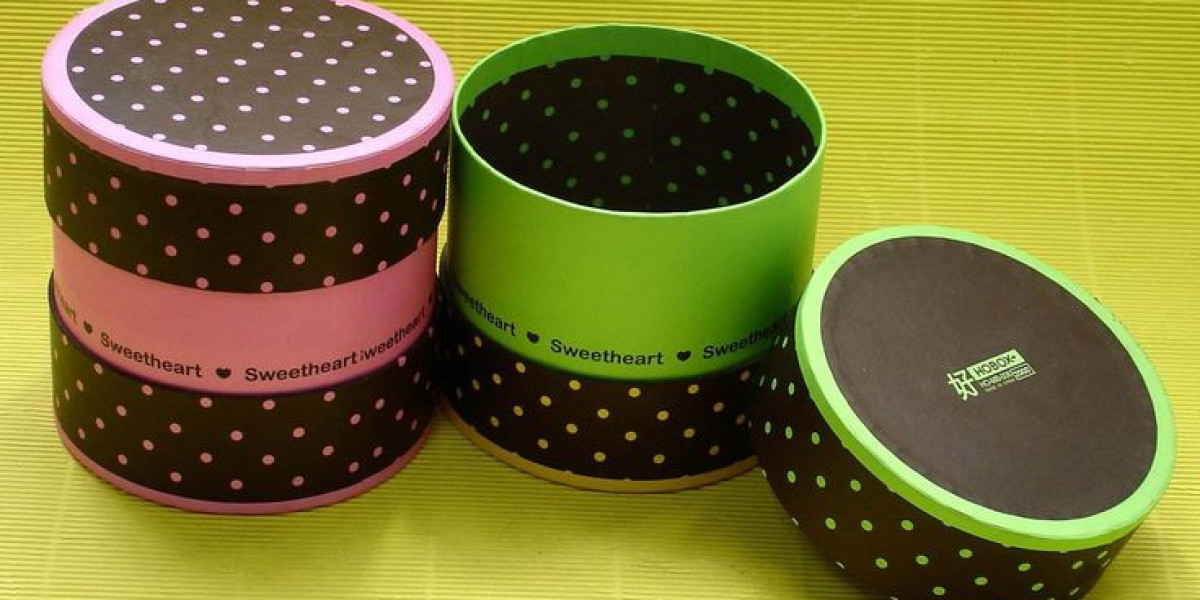
A cylindrical box swaps every flat panel for a curved one, and that changes how it has to be built. The body wraps around a tube form, the lid and base are each a separate circle, and the printed paper has to bend evenly around the curve without wrinkling at the seam. Candles, loose leaf tea, cosmetics, and hat boxes have used this shape for decades because a cylinder tends to read as more considered than a plain rectangle sitting in the same spot.
The Production Catch
Curved surfaces cost more to produce than flat ones, since wrapping paper around a tube without a visible seam takes tighter tolerances than gluing flat panels together. Turnaround usually runs a little longer too, and minimum order quantities tend to sit higher, so this format suits brands ordering real volume more than a single small batch.
Shape Changes How Fast People Notice a Box
Shape affects attention more than most brands assume. Research on packaging has found that when a package's shape stands out and attracts more attention, people tend to perceive that product as larger in volume than a similarly sized package that doesn't stand out as much. On a shelf full of rectangular boxes, a cylinder tends to draw the eye almost on its own, while a sleeve blends in visually and earns its keep once the box is actually picked up and opened.
Rigid Book Sleeves and Round Shaped Rigid Boxes end up competing for different kinds of attention. One is built to sit neatly among similar spines on a shelf, and the other is built to interrupt that same shelf on purpose.
FAQ
Can a sleeve hold more than one book or item?
Yes. Multi book sets, card decks, and layered inserts are routinely built with dividers inside a single sleeve, so one case can hold several pieces without extra packaging.
Is round packaging more fragile than a standard box?
Not inherently. The curved wall distributes pressure evenly around the circumference, which can make it more resistant to crushing from the side than a flat panel under the same force.
Which shape costs less to produce?
Sleeve style packaging is usually the cheaper of the two, since it uses flat board and simpler tooling. Round boxes cost more because of the curved forming process, though the shelf impact often justifies it for the right product.
Which One Should You Actually Order
If what you're packaging is flat, stackable, or sold as part of a set, a sleeve will protect it without adding unnecessary bulk or cost. If the product itself is round, premium, or needs to stop someone mid aisle, the cylindrical format earns its higher price through sheer shelf presence. Order a sample of each before committing if you're still unsure, since seeing both shapes side by side usually settles the decision faster than any spec sheet can.