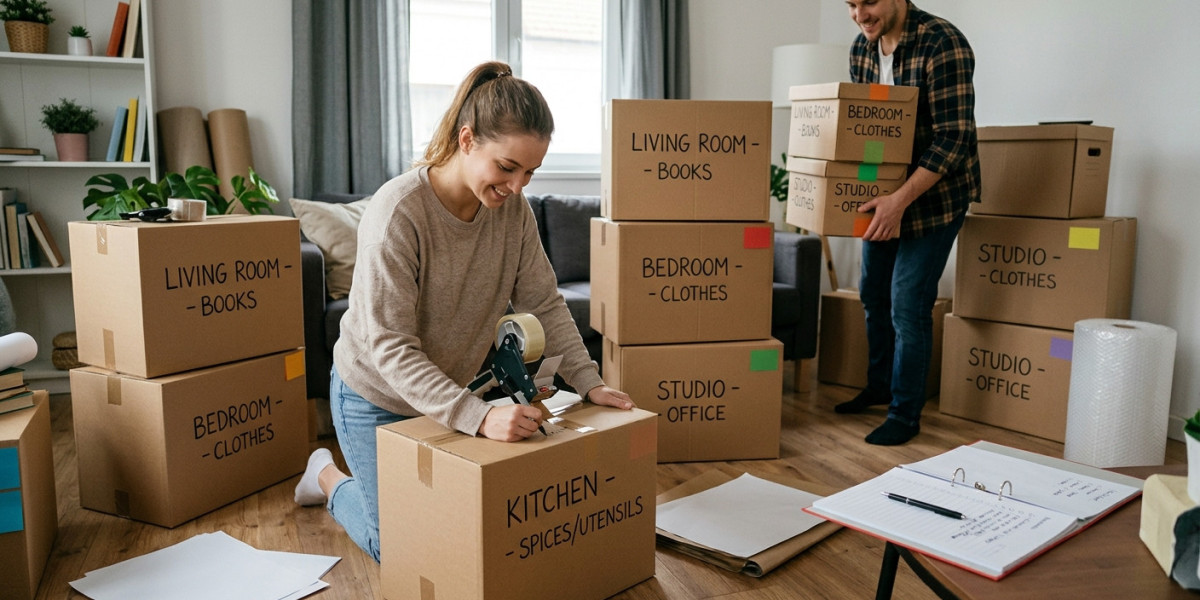

A more organized approach makes it easier to keep track of belongings and reduces unnecessary work on moving day.
The key is to create a system before the first box is packed.
Instead of packing whatever happens to be nearby, households can divide the process into manageable stages. Sorting possessions, estimating supplies, labeling boxes, and packing one room at a time can make both moving out and settling into the new home considerably easier.
Start With a Packing Plan, Not an Empty Box
One of the most common packing mistakes is starting too quickly. Filling boxes immediately may feel productive, but without a plan, belongings from different rooms can easily get mixed together.
A basic packing plan should identify which rooms will be packed first, which belongings are needed until moving day, and what supplies are required.
A practical order usually begins with items that are rarely used, such as seasonal decorations, spare linens, books, collectibles, and items stored in garages or closets. Everyday kitchenware, toiletries, clothing, and electronics can remain available until later.
Creating a rough timeline also prevents the majority of packing from being pushed into the final few days.
For people still planning other parts of their relocation, My Moving Journey can serve as a moving directory and resource website for researching moving-related information alongside the packing process.
Declutter Before Packing Anything
Every unwanted item packed into a box takes up space, requires packing materials, and eventually has to be unpacked again.
That makes decluttering one of the most useful steps before a move.
Each room can be divided into four simple categories:
Keep
Donate
Sell
Discard or recycle
Items that have not been used for years deserve particular attention. Duplicate kitchen tools, old clothing, outdated electronics, broken furniture, and forgotten storage items can significantly increase the amount that needs to be moved.
This step matters even more when professional movers are involved. Moving costs can be influenced by shipment weight, volume, labor, distance, and the services required. Reducing unnecessary belongings can therefore simplify the move while potentially lowering some moving-related costs.
Use the One-Room-at-a-Time Rule
Trying to declutter the entire home simultaneously often creates more disorder.
It is usually more manageable to finish one room or defined area before moving to another. A household might complete the guest bedroom first, followed by storage areas, the living room, and eventually high-use spaces such as the kitchen.
This creates visible progress and keeps unfinished piles from spreading throughout the home.
Create a Packing Inventory
An inventory does not need to document every spoon or T-shirt. Its purpose is to create a useful record of what has been packed and where important belongings are located.
Each box can receive a number, such as:
Kitchen 01
Kitchen 02
Bedroom 01
Office 01
Bathroom 01
A spreadsheet, notebook, or phone note can then contain a short description of each box.
For example:
Kitchen 01: baking dishes, mixing bowls, measuring cups
Bedroom 01: winter clothing and spare bedding
Office 01: books, cables, files, and desk accessories
This system becomes especially helpful when someone needs a particular item before everything has been unpacked.
Estimate Packing Supplies Before Buying Them
Running out of boxes halfway through packing can interrupt the entire process. Buying far too many supplies, on the other hand, creates unnecessary expense and clutter.
The number of boxes required depends on factors such as home size, number of occupants, storage habits, and how many possessions have accumulated over time.
Rather than relying entirely on guesswork, households can use a moving box calculator to estimate the number of boxes they may need before purchasing supplies.
Other useful packing materials include:
Packing tape
Permanent markers
Packing paper
Bubble cushioning for fragile items
Stretch wrap
Furniture covers
Mattress bags
Resealable plastic bags
Labels or colored stickers
Having these supplies available from the beginning makes it easier to maintain a consistent packing system.
Use the Right Box for the Right Items
Organization is not only about labels. The way belongings are distributed among boxes matters as well.
Heavy items such as books should generally go into smaller boxes. A large box filled entirely with books can become difficult to lift and may be more likely to fail at the bottom.
Larger boxes work better for lightweight belongings such as pillows, blankets, towels, and some clothing.
Medium boxes are useful for many everyday household items, including kitchenware, toys, small appliances, and décor.
Specialty boxes can also help protect certain belongings. Wardrobe boxes allow hanging clothes to remain on hangers, while dish boxes and dividers provide additional protection for glassware and fragile kitchen items.
Label Every Box With Useful Information
Writing only “Kitchen” on a box is better than leaving it blank, but it does not provide much information when ten kitchen boxes arrive at the new home.
A more useful label can include:
Room + general contents + priority
For example:
Kitchen — Coffee Maker & Mugs — Open First
Another box might say:
Primary Bedroom — Winter Clothes — Low Priority
Labels should be placed where they remain visible when boxes are stacked. Marking at least the top and one side is usually practical.
Consider a Color-Coding System
Colors can make boxes easier to identify at a glance.
For example:
Kitchen — Yellow
Primary bedroom — Blue
Bathroom — Green
Living room — Red
Office — Orange
The exact colors do not matter. Consistency does.
A simple color guide can be placed near the entrance of the new home so family members or movers know where each box belongs.
Pack Similar Items Together
Mixing unrelated belongings may save a few minutes while packing, but it usually creates more work during unpacking.
Kitchen utensils should stay with kitchen items. Office equipment should remain with office supplies. Bathroom products should be grouped together rather than filling empty spaces in unrelated boxes.
Keeping similar belongings together also makes the inventory system more useful.
There are exceptions. Soft items such as towels can sometimes provide extra cushioning around appropriate fragile objects, but random mixing should not become the default packing method.
Protect Fragile Items Properly
Fragile belongings require more than a box marked “Fragile.”
Glassware, ceramics, artwork, mirrors, electronics, and decorative pieces should be packed according to their shape and vulnerability. Empty spaces inside boxes should be minimized so objects cannot shift excessively during transportation.
Plates are commonly safer when individually wrapped and packed vertically rather than stacked flat. Glasses and mugs can be wrapped separately, while additional cushioning can be placed around vulnerable areas.
Fragile boxes should also be clearly marked on multiple sides.
For high-value, unusually shaped, or especially delicate possessions, professional packing or custom crating may be worth considering.
Keep Hardware With the Furniture It Belongs To
Furniture disassembly creates a surprisingly common problem: missing screws, bolts, brackets, and other small parts.
Instead of putting all hardware into one container, each furniture item's components can be stored in a separate resealable bag.
The bag should be labeled clearly, such as:
Dining Table Hardware
or
Primary Bedroom Bed Frame
Whenever practical, the sealed bag can be securely attached to the corresponding furniture piece or kept in a clearly identified hardware box.
Taking photographs before dismantling complicated furniture can also provide a useful reference during reassembly.
Prepare an Essentials Box Separately
Not everything should disappear into the moving truck.
An essentials box or bag should contain the belongings required during the first night and morning in the new home.
Depending on the household, that may include:
Toiletries
Toilet paper
Phone chargers
Basic medications
A change of clothes
Towels
Bedding
Basic cleaning supplies
Pet essentials
Children's necessities
Coffee or simple breakfast supplies
A few basic kitchen items
Important documents, identification, valuables, medications, and irreplaceable personal items are generally better kept directly with the household rather than packed among ordinary moving boxes.
Pack Important Documents Separately
Birth certificates, passports, insurance paperwork, leases, property documents, financial records, and moving contracts should not be placed randomly in household boxes.
A dedicated folder or document case keeps these records accessible.
Digital copies of important documents can also provide an additional backup where appropriate. Sensitive documents should be stored securely rather than left in an easily accessible box.
Avoid Overpacking Boxes
A box that closes is not necessarily packed correctly.
Overloaded boxes can become difficult to carry and may tear or collapse. They can also increase the chance of injury when someone attempts to lift them.
A better approach is to balance weight across multiple boxes.
Heavy objects should generally remain in smaller containers, while lightweight items can fill larger boxes. Empty spaces can be filled with appropriate packing material to reduce movement without unnecessarily increasing weight.
Before sealing a box, it should be possible for an adult to lift it safely without excessive strain.
Create a “Do Not Pack” Area
During a busy move, items that should remain accessible can accidentally end up inside the moving truck.
A designated “Do Not Pack” area can prevent that problem.
This space can hold:
Keys
Wallets and purses
Important paperwork
Medication
Phones and chargers
Moving-day snacks
Cleaning supplies
Pet supplies
Children's essentials
Items traveling personally with the household
The area should be clearly separated from boxes that movers are expected to load.
Take Photos Before Packing Electronics
Entertainment systems, computers, routers, and other electronics can involve numerous cables.
Before unplugging them, taking a clear photograph of the connections can make setup easier at the destination.
Cables can then be labeled and stored with the device they belong to. Small accessories such as remote controls, adapters, and mounting hardware should also remain grouped with the correct equipment.
This simple step can prevent an hour of guessing after the move.
Finish Packing Before Moving Day
Moving day should primarily be about transportation, final checks, and coordination—not packing an entire kitchen while movers are waiting.
Ideally, nearly all ordinary belongings should already be boxed and labeled before moving day begins.
Only essential items should remain unpacked.
A final walkthrough can then focus on closets, cabinets, drawers, garages, storage spaces, and other places where belongings are easily forgotten.
Make Unpacking Part of the Packing Strategy
Good packing should make unpacking easier.
That means boxes should be organized according to where belongings will go in the new home, not simply where empty space is available in the current one.
Priority labels can help determine which boxes should be opened first.
A practical sequence might be:
Essentials
Bathroom supplies
Bedding
Basic kitchen equipment
Everyday clothing
Work or school necessities
Décor and low-priority belongings
With this approach, the new home becomes functional before every box has been emptied.
Final Thoughts
Organized packing is less about working faster and more about creating a system that remains useful throughout the move.
Decluttering first, planning supplies, packing room by room, maintaining an inventory, labeling clearly, and separating essentials can prevent much of the confusion associated with moving. These habits also make it easier for movers or family members to understand where belongings belong.
When packing decisions are made with unpacking in mind, moving day becomes easier to manage and settling into the new home can happen with far less searching, sorting, and unnecessary work.