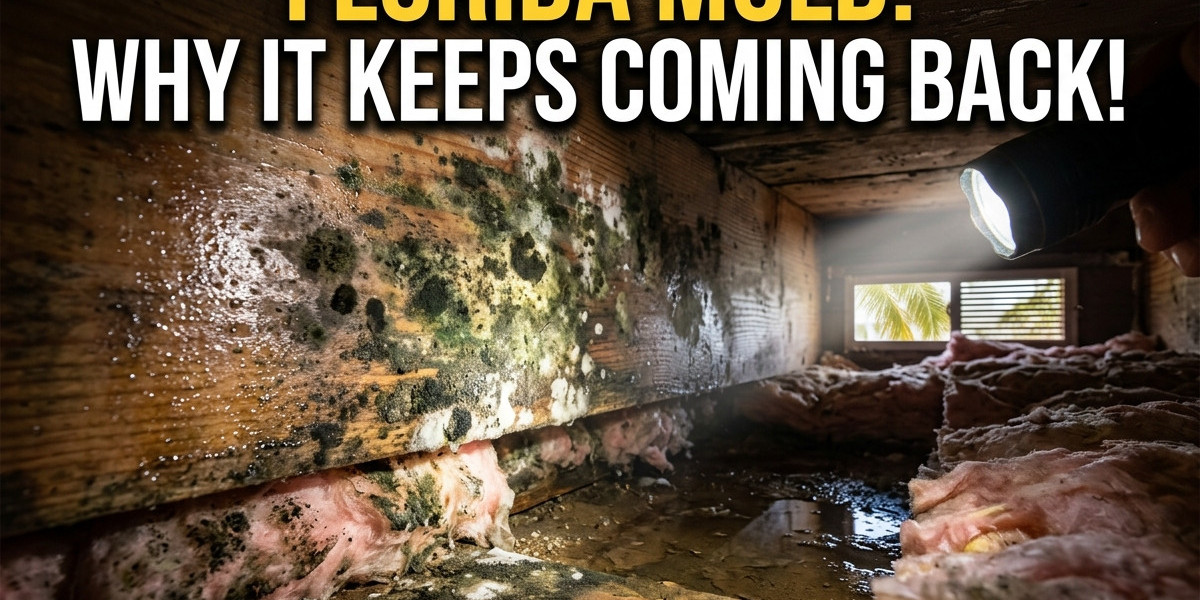

You cleaned up the crawl space. Maybe you had it treated, dried out, and sealed. For a while, everything looked fine. Then a few months later, that musty smell creeps back through the floorboards, and the same dark patches show up on the joists again. It's frustrating, but it's also one of the most common patterns homeowners in Florida run into.
Crawl space mold that keeps returning isn't a cleaning problem. It's a moisture problem that was never fully solved. Mold can't grow without water, so if it's growing back, there's still a source feeding it. That source might be a slow plumbing leak, groundwater rising through the soil, humid outside air moving in, or a vapor barrier that's doing less than it should.
This article explains why crawl space mold in Florida homes is so persistent, what the warning signs look like, and how to break the cycle for good. If you've dealt with repeat growth, the issue usually comes down to a handful of fixable causes.
Why Florida Crawl Spaces Stay Damp
A crawl space sits low to the ground, often with bare soil beneath it and vents open to the outside air. That setup works fine in dry climates. In Florida, it's a different story. The water table can sit high, the air is heavy with humidity most of the year, and sandy soil drains unevenly. Water finds its way in and then struggles to leave.
Warm, humid air also moves into crawl spaces easily. When it cools against joists, pipes, and foundation walls, condensation forms. That film of moisture is enough for mold spores to take hold. Add a rainy season that lasts for months, and a crawl space can stay damp almost continuously. That's why mold often returns faster in Florida than in other parts of the country, even after a thorough cleanup.
The Real Reasons Crawl Space Mold Comes Back
Mold returning after treatment almost always points to a moisture source that was missed or only partly addressed. These are the most common ones.
Groundwater and Soil Moisture
If the ground under your home stays wet, moisture will keep rising into the crawl space. Poor yard drainage, clogged gutters, or a foundation that doesn't direct water away properly all make this worse. Even if the soil looks dry on the surface, it can hold moisture underneath for months. A missing or damaged vapor barrier lets that moisture evaporate straight into the crawl space air.
Poor Ventilation or No Ventilation at All
Traditional crawl space vents were designed to let air move through. In humid climates, they often do more harm than good. Open vents let in warm, moist outside air that condenses once it hits cooler surfaces inside. Some homes have vents blocked by debris, insulation, or landscaping, which traps moisture instead. Either way, the space can't dry out.
Plumbing Leaks and Slow Drips
A small leak under the house is easy to ignore because nobody sees it. Slow drips from supply lines, drain pipes, or the water heater feed moisture into the soil and the surrounding wood. Over weeks, that's enough to keep the crawl space humid and give mold a steady water supply.
HVAC Duct Condensation
Ductwork that runs through a crawl space can sweat in the same way a cold drink does on a hot day. Poorly insulated ducts drip condensation onto the soil and nearby wood. That constant moisture becomes a repeat source of mold growth, even after surfaces have been cleaned.
Air Leaks Between the Home and Crawl Space
Gaps around plumbing, wiring, and the floor structure let warm, humid air from the living space drift down into the crawl space. That air cools and condenses, adding moisture to an already damp environment. Sealing these gaps is often overlooked, but it makes a real difference.
Warning Signs Mold Is Coming Back
You don't always need to crawl under the house to know something's wrong. The signs usually show up above the floor first.
A musty, damp smell that lingers in ground-floor rooms is one of the earliest clues. It tends to get stronger on humid days or after rain. Warped or springy floorboards, especially near exterior walls, can point to moisture underneath. So can cold floors, higher energy bills, or a sudden rise in allergy-like symptoms at home.
If you do check the crawl space, look for dark staining on joists and subfloor, white or gray powdery patches on wood, and visible condensation on pipes or ducts. Damp insulation, standing water, or a strong earthy smell are all red flags. When growth shows up in the same spots after a previous cleanup, that's a strong sign the underlying moisture source was never fixed.
Why Cleaning Alone Doesn't Solve It
Cleaning mold off wood removes what you can see. It doesn't remove the conditions that let it grow. If the crawl space stays damp, spores that remain in the air or in small crevices will settle again and start a new colony. That's why so many homeowners find themselves repeating the same cleanup every year.
Real control means lowering the moisture in the space and keeping it low. That usually involves a combination of steps — improving drainage, sealing air leaks, repairing plumbing, and managing humidity. Some homes also benefit from a properly installed vapor barrier or a crawl space encapsulation approach. The right fix depends on what's driving the moisture in the first place, which is why an inspection matters before any work begins. Our crawl space mold service is built around that idea — identify the source first, then treat the growth.
How Florida's Climate Makes Repeat Growth More Likely
A few states deal with crawl space moisture. Florida deals with it year-round. The combination of high humidity, frequent rain, and a high water table in many areas means the crawl space never fully dries out on its own. In Fort Pierce and along the Treasure Coast, that pattern is especially strong after hurricane season, when saturated ground and roof leaks add even more moisture to the mix.
This is also why crawl space mold often returns faster here than in drier parts of the country. A space that would stay dry for months elsewhere can go damp again in a few weeks in Florida. Understanding that difference helps set realistic expectations after treatment and makes ongoing moisture control more important. Our guide on hidden water damage signs covers how unnoticed moisture builds up in Florida homes.
What to Do If Crawl Space Mold Keeps Returning
If mold has come back more than once, it's time to look at the moisture source instead of repeating the cleanup. Start with the obvious: check gutters, downspouts, and grading around the foundation. Repair any plumbing leaks under the house. Look for gaps around pipes and wiring where humid air can pass through. If the crawl space has a vapor barrier, check whether it's intact and covering the soil fully.
For homeowners in Fort Pierce and nearby areas, a professional inspection can identify what's actually feeding the growth. It also helps determine whether the space needs better ventilation, encapsulation, or drainage work. Treating the mold without fixing the cause is a short-term fix at best. Addressing both together is what finally breaks the cycle.
FAQs
Why does crawl space mold come back after cleaning?
Because the moisture source was never fixed. Mold needs water to grow, so if the crawl space stays damp, new growth will keep returning no matter how well it was cleaned.
Does bleach kill crawl space mold permanently?
Bleach can kill mold on hard surfaces, but it doesn't stop it from returning. It also doesn't penetrate porous materials like wood. If the moisture issue remains, mold will grow back.
Should I close my crawl space vents in Florida?
Many Florida homes benefit from a sealed or encapsulated crawl space rather than open vents, since vents can pull humid air inside. The right choice depends on the home and the moisture conditions.
How do I know if my crawl space has a moisture problem?
Common signs include a musty smell indoors, warped floors, condensation on pipes, damp insulation, and visible staining on wood. A professional inspection confirms what's happening.
Can crawl space mold affect my health?
Mold spores can travel into living spaces and trigger allergy-like symptoms in some people. If symptoms persist, it's worth having both the crawl space and the indoor air checked.
Final Thoughts
Crawl space mold that keeps coming back is a sign that moisture is still finding its way in. Cleaning the surface without fixing the cause only buys time. In Florida's climate, that cycle repeats faster than most homeowners expect, which is why addressing the source matters just as much as removing the growth.
If you've cleaned up mold in the crawl space more than once, the next step is figuring out why. A proper inspection identifies the moisture source, confirms the extent of the growth, and points to the right long-term fix. contact us to schedule an assessment and stop the cycle for good.