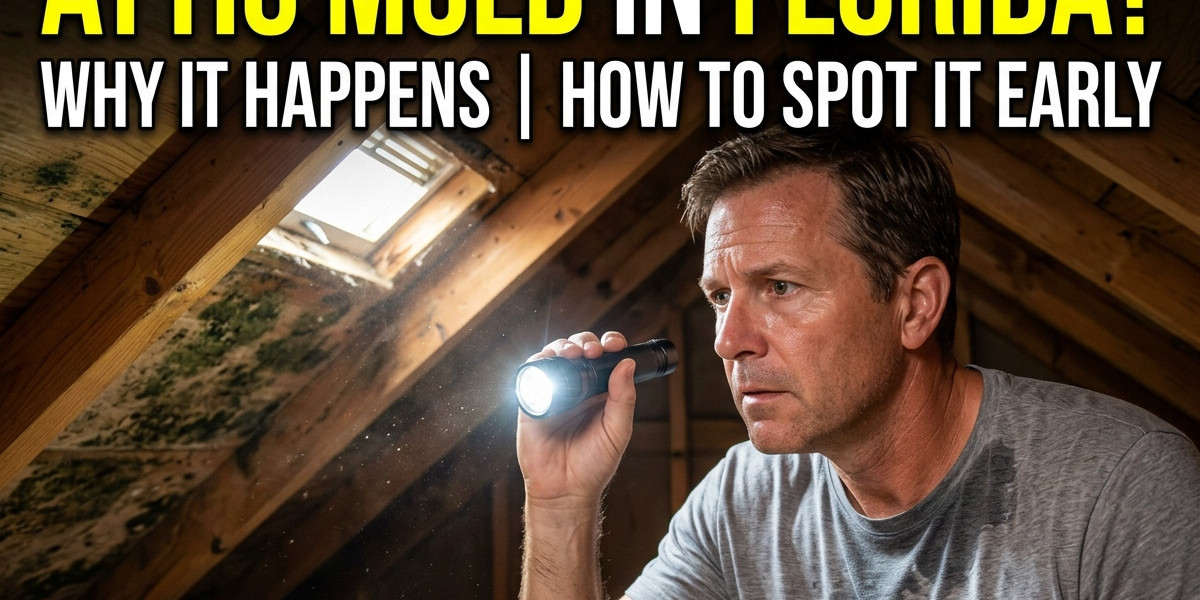

Attic mold is one of the most overlooked problems in Florida homes. Most people think about mold in bathrooms, under sinks, or along window frames. The attic rarely crosses their mind until a musty smell starts drifting through the house, or a roofer points it out during a routine repair. By then, the problem has usually been growing for months.
Florida's climate makes attics a prime target for mold. Heat, humidity, and frequent roof leaks create ideal conditions for spores to settle and spread. Unlike a damp corner in a bedroom, an attic can stay wet for weeks without anyone noticing. That's what makes early detection so valuable.
This article breaks down why attic mold happens in Florida homes, what signs to watch for, and when it's time to bring in a professional. Whether you own an older home near the water or a newer build inland, the same core issues apply.
Why Florida Attics Are So Prone to Mold
An attic is a closed environment that traps heat and moisture. In Florida, that combination rarely gets a break. Summer temperatures push attic air well above outdoor levels, and the humidity that hangs in the air across the Treasure Coast doesn't stay outside. It seeps in through vents, gaps around pipes, and small openings in the roof deck.
When warm, moist air meets a cooler surface, condensation forms. That moisture settles on roof sheathing, rafters, and insulation. Mold spores are already present in almost every home. All they need is a damp surface and a few days to start growing. Once that cycle begins, it can quietly spread across large sections of the attic before anyone steps up there to check.
The Most Common Causes of Attic Mold
Attic mold almost always traces back to one of a handful of sources. Finding the source matters more than scrubbing the surface. If the moisture issue isn't fixed, mold will return.
Roof Leaks and Storm Damage
Florida storms are hard on roofs. Wind-driven rain, loose shingles, and damaged flashing all create entry points for water. A small leak may only let in a few drops at a time, but over weeks and months, that's enough to keep the roof deck damp. After a hurricane or a heavy summer storm, it's worth checking the attic for signs of water intrusion, even if no drip is visible from inside the house.
Poor Ventilation
Attics need airflow. Ridge vents, soffit vents, and gable vents work together to move hot, humid air out and pull cooler, drier air in. When any of these are blocked, covered by insulation, or missing, moisture has nowhere to go. It builds up, condenses, and creates the exact environment mold needs. Homes with older ventilation systems or recent insulation upgrades are common culprits.
Bathroom and Kitchen Exhaust Vents
Exhaust fans are supposed to push moist air outside. Sometimes they're routed into the attic instead. That sends warm, humid air from showers and cooking directly into the space above the ceiling. Over time, that moisture settles on the attic's cool surfaces. It's a surprisingly common issue in older Fort Pierce and Port St. Lucie homes where venting wasn't updated.
HVAC Duct Leaks
Air conditioning ducts that run through the attic can sweat or leak. Cool air escaping into a hot attic creates condensation almost immediately. If the ductwork has worn insulation or loose connections, moisture can build up around the ducts and drip onto nearby surfaces.
High Indoor Humidity
Even without a leak, everyday living produces moisture. Cooking, showering, and laundry all release water vapor into the air. In a well-sealed home, that moisture can rise into the attic and stay there. Homes with poor attic ventilation face the highest risk.
Signs of Attic Mold You Shouldn't Ignore
Attic mold doesn't always announce itself. Many homeowners only discover it during a roof repair or home inspection. Still, there are signs worth paying attention to.
A musty, earthy smell that lingers in upstairs rooms or hallways is one of the earliest clues. If the smell gets stronger on humid days, that's a strong hint the attic is the source. Dark stains or discoloration on roof sheathing and rafters are another sign. Mold doesn't always look black. It can appear as gray, green, or white patches that spread in irregular patterns.
Visible water stains, peeling paint on ceiling corners, or damp insulation are also red flags. In some cases, the first sign is a worsening allergy-like reaction among family members — more sneezing, coughing, or headaches when they're home. If you notice any of these, it's worth having the attic inspected before the problem spreads further. Our attic mold service covers exactly this kind of inspection and assessment.
Attic Mold vs. Mildew: What's the Difference?
People often confuse mold and mildew. Both thrive in damp conditions, but they behave differently. Mildew tends to grow on surfaces and looks powdery or fluffy, usually white or gray. It's easier to clean and less likely to cause structural damage. Mold grows deeper into materials, appears darker and patchier, and can spread through the wood itself.
In an attic, mildew is often an early warning. If it's caught quickly, a thorough cleaning and a fix to the moisture source may be enough. Once mold takes hold on roof sheathing or rafters, the problem becomes harder to manage and often needs professional attention.
Why Attic Mold Can Be More Than a Cosmetic Problem
Some homeowners treat attic mold as a minor cosmetic issue. That's a mistake. Mold doesn't stay in the attic. Spores travel through air currents into living spaces, especially when HVAC systems pull air from the attic or nearby areas. That can affect indoor air quality across the whole house.
Long-term moisture also damages the wood structure itself. Roof sheathing and rafters that stay damp can weaken over time, and ongoing leaks can lead to rot. What starts as a small patch of mold can become a structural and air quality concern if it's left alone. Catching it early saves money and avoids bigger repairs down the road.
How Florida's Climate Makes Attic Mold Worse
Fort Pierce and the surrounding Treasure Coast sit in one of the most humid parts of the country. Summers are long, storms are frequent, and the air holds moisture most of the year. That means attics dry out far more slowly than in drier states. Even a small leak that would dry up in a week elsewhere can stay damp for a month here. Our guide to Fort Pierce climate and mold growth explains how local conditions affect homes year-round.
Hurricane season adds another layer of risk. Roof damage from storms often goes unnoticed until the next heavy rain exposes it. By then, moisture has had time to sit and mold has had time to grow. Homes near the water, like those along the Indian River, also deal with salt air and constant humidity that wear down roofing materials faster.
When to Call a Professional for Attic Mold
Not every patch of attic mold needs a full remediation team. Small, surface-level mildew from a one-time moisture event can sometimes be handled with cleaning and improved ventilation. But there are clear situations where professional help is the right call.
If the mold covers a large area, has soaked into the wood, or keeps coming back after cleaning, it's time to bring in a professional. The same applies if you can smell it throughout the house, if anyone in the home has ongoing respiratory symptoms, or if there's an active leak you can't locate. A proper mold inspection can identify the source, confirm what type of mold is present, and recommend the right next step — whether that's remediation, ventilation improvements, or a roofing repair.
For homeowners in Fort Pierce and nearby areas, a professional inspection takes the guesswork out of the process. It also gives you documentation if you plan to file an insurance claim or sell the home later.
Preventing Attic Mold Before It Starts
Prevention comes down to two things: keeping moisture out and keeping air moving. Fix roof leaks quickly, even small ones. Make sure bathroom and kitchen exhaust fans vent outside, not into the attic. Check that soffit and ridge vents aren't blocked by insulation or debris.
If humidity stays high inside the home, a dehumidifier or improved ventilation can help. After any major storm, take a quick look in the attic for new stains, drips, or damp spots. These small habits make a big difference in a climate like Florida's, where moisture is a year-round factor.
FAQs
How common is attic mold in Florida homes?
It's fairly common, especially in older homes with outdated ventilation or roofs that have seen storm damage. Florida's year-round humidity makes attics more prone to moisture buildup than in most other states.
Can attic mold make you sick?
Mold exposure can trigger allergy-like symptoms such as sneezing, coughing, headaches, and irritated eyes in some people. Reactions vary, and anyone with ongoing symptoms should consult a medical professional.
Does attic mold always mean there's a leak?
No. Poor ventilation and high indoor humidity can also cause attic mold without an active leak. That's why a proper inspection matters — it identifies the real source.
Can I remove attic mold myself?
Small surface mildew from a one-time moisture issue may be manageable with cleaning and better ventilation. Larger or recurring mold growth usually needs professional assessment and remediation.
Will homeowners insurance cover attic mold?
Coverage depends on the policy and the cause. Mold from a sudden, covered event may be treated differently than mold from long-term neglect. Review your policy or speak with your insurer for specifics.
Final Thoughts
Attic mold in Florida is easy to miss and easy to underestimate. The same heat and humidity that make the state comfortable most of the year also create ideal conditions for mold to grow above your ceiling. Understanding the causes — leaks, poor ventilation, and trapped moisture — helps you spot the warning signs before they turn into something bigger.
If you've noticed a musty smell, stains in the attic, or worsening allergies at home, it's worth having the space checked. A professional inspection confirms what's growing, why it's there, and what needs to happen next. contact us to schedule an assessment. For homeowners across Fort Pierce and the Treasure Coast, catching attic mold early is one of the simplest ways to protect both your home and your health.