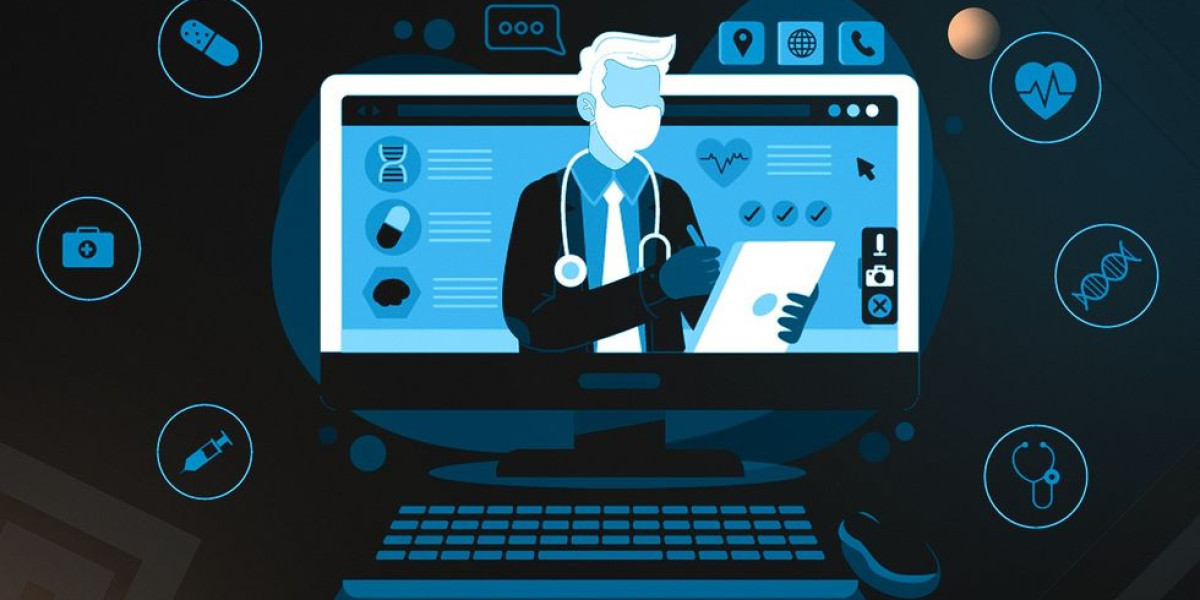

Hospitals generate enormous amounts of information every day. Patient registrations, appointment records, laboratory results, medication data, bed occupancy, staff schedules, billing transactions, and inventory records all contribute to a constantly growing pool of healthcare data. However, collecting data alone does not guarantee better decisions. Hospitals need effective ways to turn this information into useful insights. This is where predictive analytics can play an important role.
Predictive analytics uses historical and current data, statistical techniques, machine learning, and analytical models to identify patterns and estimate what may happen in the future. In hospital management, these insights can help administrators and healthcare professionals move beyond simply reacting to problems toward anticipating demand, identifying risks, and planning resources more effectively.
What Is Predictive Analytics in Healthcare?
Predictive analytics is the process of analyzing existing data to identify patterns that can help forecast future events or outcomes. In healthcare, predictive models can examine information such as patient demographics, admission histories, appointment trends, treatment patterns, resource utilization, and operational data to generate forecasts.
It is important to understand that a prediction is not a guarantee. Predictive analytics provides estimates based on available data and statistical relationships. Healthcare professionals and hospital administrators still need to interpret those insights alongside professional expertise, organizational policies, and the circumstances of individual patients.
Why Does Predictive Analytics Matter for Hospitals?
Hospital decision-making often involves uncertainty. Administrators may need to determine how many staff members will be required next week, whether enough beds will be available, or how much medical inventory should be ordered. Traditional approaches may depend heavily on previous experience and simple historical averages.
Predictive analytics can provide a more detailed view by analyzing multiple variables simultaneously. Instead of asking only what happened previously, hospital leaders can also ask what is likely to happen next and what resources may be required. This can support proactive planning and potentially reduce avoidable operational disruptions.
Predicting Patient Demand
Patient demand can change according to seasons, local events, disease patterns, holidays, and other factors. Unexpected increases in patient volume can place significant pressure on emergency departments, outpatient clinics, laboratories, and other hospital services.
Predictive models can analyze historical patient volumes and relevant operational patterns to estimate future demand. Hospital managers can use these forecasts to plan staffing, prepare facilities, allocate equipment, and adjust appointment capacity. Better demand forecasting can help organizations prepare for busy periods rather than responding only after capacity has already been stretched.
Improving Hospital Bed Management
Bed availability is a critical operational concern. When beds are not managed efficiently, admitted patients may experience delays while hospitals struggle to accommodate new arrivals.
Predictive analytics can examine admission rates, discharge patterns, average lengths of stay, transfers, and historical occupancy levels to estimate future bed requirements. These insights can help hospital administrators coordinate admissions and discharges more effectively. Predictive bed management may also help identify periods when capacity is likely to become constrained.
Supporting Emergency Department Decisions
Emergency departments need to manage unpredictable patient flows while maintaining appropriate resources. Long waiting times can emerge when patient volume suddenly exceeds available capacity.
Predictive analytics can help identify historical patterns in emergency department demand. By forecasting likely patient volumes during specific periods, administrators can make more informed decisions about staffing and resource allocation. These tools should support clinical teams rather than determine clinical priorities independently.
Optimizing Staff Scheduling
Staffing decisions are another area where predictive analytics can provide practical value. Hospitals must maintain appropriate coverage across departments while managing employee availability, workload, and patient demand.
Predictive models can examine historical workload, patient volumes, shift patterns, and seasonal trends to estimate staffing requirements. Administrators can use this information when planning schedules and allocating employees. More accurate forecasting can help reduce situations where departments are significantly understaffed or where staffing resources are unnecessarily underutilized.
Managing Medical Inventory
Medical inventory management involves balancing availability with cost and waste. Hospitals need essential medicines, surgical supplies, laboratory materials, protective equipment, and numerous other products.
Predictive analytics can analyze historical consumption, purchasing patterns, expiration dates, supplier information, and expected patient demand to forecast future inventory requirements. This can help hospital managers determine when supplies may need replenishment and identify products that may be at risk of overstocking or expiration.
Improving Appointment Scheduling
Missed appointments and inefficient scheduling can affect both patient experience and hospital productivity. Predictive analytics can examine historical appointment behavior to identify patterns associated with cancellations, delays, or no-shows.
Hospitals can use these insights to improve scheduling strategies and send targeted reminders where appropriate. Predictive models may also help estimate appointment durations and identify periods of high demand, allowing administrators to manage clinic capacity more efficiently.
Supporting Financial Decision-Making
Hospitals also make numerous financial decisions involving revenue, expenses, claims, payments, staffing, and resource utilization. Predictive analytics can help administrators identify financial patterns and forecast future trends.
For example, hospitals can analyze historical revenue and expense information to estimate future financial requirements. Predictive models may also help identify unusual billing patterns or areas where operational inefficiencies could be contributing to unnecessary costs. These insights can support budgeting and resource planning.
Predicting Patient Risks
Predictive analytics has applications beyond hospital administration. When appropriate and properly validated, predictive models can help healthcare professionals identify patients who may have an increased risk of certain outcomes.
For instance, models may analyze multiple clinical variables to help identify patients who could require closer monitoring. Such systems can potentially support early intervention and improve resource prioritization. However, predictions should never be treated as definitive medical conclusions. Clinical decisions must remain under the responsibility of qualified healthcare professionals.
Using Predictive Analytics for Hospital Quality Improvement
Quality improvement depends on understanding where processes are performing well and where problems may occur. Predictive analytics can help hospitals analyze trends in operational and clinical data to identify potential areas for improvement.
By monitoring patterns over time, hospital leaders can evaluate whether interventions are producing desired results. Predictive insights can also help identify processes that may require additional attention before they develop into larger operational problems. This creates an opportunity for continuous improvement rather than relying solely on periodic reviews.
The Role of Real-Time Data
The usefulness of predictive analytics depends heavily on the quality and timeliness of data. Historical information can help identify long-term patterns, but real-time or frequently updated information can make predictions more responsive to changing conditions.
Hospitals that connect patient management, laboratory, pharmacy, financial, and operational systems can potentially create a more comprehensive data environment. When information is accurate, standardized, and available to authorized users, analytical systems can produce more meaningful insights for decision-makers.
Challenges of Predictive Analytics in Pakistan
Hospitals in Pakistan may encounter several challenges when implementing predictive analytics. These include fragmented information systems, inconsistent data formats, limited digital infrastructure, insufficient historical data, implementation costs, and shortages of specialized analytical expertise.
Data privacy and security are also important considerations. Healthcare organizations must ensure that sensitive patient information is protected and that analytical systems use appropriate access controls and security measures. Staff training is equally important because hospital teams need to understand both the capabilities and limitations of predictive tools.
Human Judgment Still Matters
Predictive analytics should support decision-making rather than replace human expertise. A model may identify a pattern, but hospital administrators and healthcare professionals need to determine how that information should be applied in a real-world situation.
Models can also produce inaccurate predictions when the underlying data is incomplete, outdated, biased, or poorly structured. Regular validation, monitoring, and review are therefore necessary. Hospitals should evaluate whether predictive tools continue to perform accurately as patient populations, workflows, and operational conditions change.
Building a Data-Driven Hospital
Predictive analytics becomes more useful when it is part of a broader digital transformation strategy. Hospitals need reliable systems for collecting, storing, integrating, and managing information before advanced analytics can deliver meaningful results.
A strong digital foundation can help organizations bring information from different departments into structured workflows. This makes it easier to analyze operational performance, identify trends, and develop more informed strategies for future planning.
The Future of Predictive Analytics in Hospitals
As healthcare technology develops, predictive analytics is likely to become increasingly integrated into hospital management. Advances in artificial intelligence, machine learning, cloud computing, connected medical devices, and healthcare information systems could enable hospitals to analyze larger datasets and generate increasingly useful operational insights.
The future hospital may rely on predictive dashboards that help administrators anticipate patient demand, staffing requirements, bed shortages, inventory needs, and other operational changes. The goal should not be to automate every decision but to provide decision-makers with better information at the right time.
Conclusion
Predictive analytics can improve hospital decision-making by helping organizations anticipate patient demand, manage beds, optimize staffing, control inventory, improve scheduling, support financial planning, and identify potential risks. Its effectiveness, however, depends on high-quality data, secure digital infrastructure, appropriate analytical models, and human oversight. Instacare.com.pk can help healthcare organizations move toward more structured and digitally enabled hospital operations. As healthcare providers increasingly adopt data-driven management practices, reliable Hospital Management Software in Pakistan can provide a strong foundation for collecting and organizing the information needed to support predictive analytics and smarter hospital decisions.