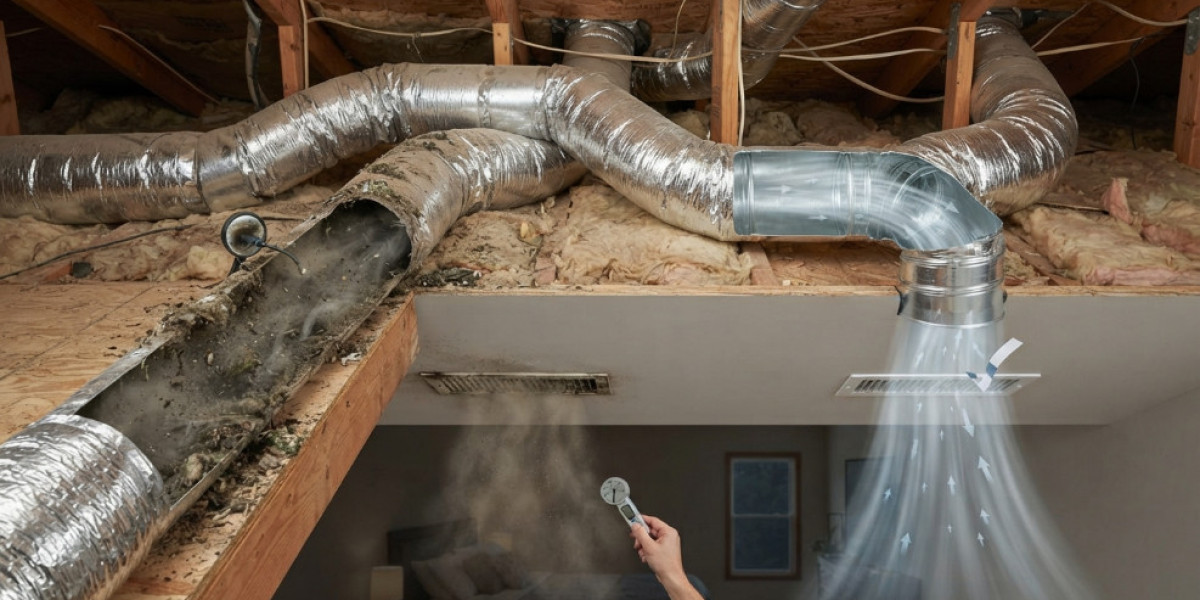

Your HVAC system can be running normally while the airflow in your home slowly gets worse. Some rooms may feel comfortable, while others stay warm, cold, or noticeably stuffy. One possible reason is buildup inside the ductwork that limits how freely air can move.
Dust, pet hair, loose debris, and other particles can collect inside ducts over time. When this buildup becomes heavy, the system may have to work harder to push conditioned air through the same pathways. That can affect comfort throughout the home.
Why Airflow Depends on Clean Ductwork
Your HVAC system needs open, reasonably clear air passages to move conditioned air from the equipment into each room. The return side also needs to pull indoor air back toward the system without unnecessary resistance.
When dirt builds up inside those passages, it can interfere with that movement. The effect may not happen all at once. Instead, homeowners often notice gradual changes, such as weaker air from certain vents or rooms that take longer to reach the desired temperature.
Dust Can Build Up Where You Cannot See It
Visible dust around a vent does not always show what is happening deeper inside the duct. Fine particles can settle along the interior surfaces, while larger debris may collect in sections where airflow is already slower.
Over time, that buildup reduces the usable space inside parts of the duct. Even a partial blockage can affect how much air reaches a room, especially when the system is already working near its normal capacity.
Return Ducts Matter Too
Airflow problems are not always caused by the supply ducts. Return ducts bring indoor air back to the HVAC equipment, so restrictions on this side can also affect overall system performance.
When the return side struggles to pull enough air, the system may not circulate air as effectively. This can contribute to uneven temperatures and make the HVAC system run longer than expected.
How Dirty Ducts Create Uneven Airflow
One of the clearest signs of an airflow problem is that different rooms feel very different even when the thermostat is set to the same temperature. A bedroom may feel warm while the living room is comfortable, or one upstairs room may receive much less air than rooms closer to the equipment.
These differences can happen for several reasons, but dirty or restricted ductwork can be part of the problem. When airflow becomes limited, rooms farther along the duct system may receive less conditioned air.
Some Vents May Feel Much Weaker
Put your hand near several supply vents while the HVAC system is running. If some vents produce a noticeably stronger stream of air than others, there may be an airflow imbalance worth investigating.
A small difference can be normal, but a major change between rooms should not simply be ignored. Duct restrictions, leaks, closed dampers, or other HVAC issues can all contribute to weak airflow.
Certain Rooms May Take Longer to Cool
A room that takes much longer to cool or heat can be a sign that conditioned air is not reaching it efficiently. This becomes especially noticeable during periods of heavy heating or cooling use.
When air duct cleaning services in Aurora, CO are considered as part of HVAC maintenance, the ductwork can be inspected for accumulated debris and other conditions that may interfere with air movement.
What Happens When Dust Reduces the Air Passage
Heavy dust buildup can change the way air travels through a duct. Instead of moving smoothly through an open pathway, air has to pass around accumulated material and uneven surfaces.
This added resistance can reduce the amount of air reaching certain vents. It can also contribute to a system that seems less effective even though the thermostat, furnace, or air conditioner is still turning on as usual.
Built-Up Debris Can Cause More Resistance
Not every duct has the same amount of buildup. Some sections may remain fairly clean while others collect more material because of their location, shape, or airflow pattern.
When a heavily affected section is part of an important supply or return pathway, it can have a larger effect on the system. This is one reason a proper inspection is more useful than simply judging the condition of visible vents.
Why Your HVAC May Run Longer
An HVAC system runs to satisfy the thermostat. When airflow is restricted, the system may need more time to move enough conditioned air through the home.
Longer run times do not automatically mean dirty ducts are the cause. Filters, insulation, duct leaks, equipment condition, thermostat placement, and other factors can also be responsible. Still, restricted ductwork is worth considering when airflow has noticeably changed.
Longer Runs Can Affect Comfort
A system that runs for extended periods may still leave some rooms uncomfortable. The equipment continues working, but the conditioned air is not being distributed evenly.
This can be frustrating because adjusting the thermostat may not solve the underlying problem. The issue may be with how air is moving through the house rather than the temperature setting itself.
How Professionals Check for Airflow Problems
A professional does not need to assume that every airflow issue comes from dirty ducts. The duct system, vents, filters, and accessible components should be considered together.
They may look for visible buildup, disconnected sections, crushed ducts, leaks, blocked registers, and other conditions that could restrict movement. This helps determine whether cleaning is actually appropriate or whether another repair is needed.
Cleaning Targets the Buildup
When dirt is the problem, professional equipment can be used to loosen and remove accumulated debris from accessible parts of the duct system. The goal is to remove material that is interfering with proper airflow rather than simply making the vent openings look clean.
A thorough approach also considers the return side because cleaning only the supply vents may leave significant buildup elsewhere in the system.
When Weak Airflow Should Be Investigated
A gradual drop in airflow deserves attention when it affects several rooms or becomes clearly different from how the system performed before. Visible dust blowing from vents, unusual odors, or repeated filter problems can add to the concern.
It is also worth investigating after construction or remodeling work. Fine dust from renovation activity can enter HVAC pathways and settle inside areas that are difficult to reach through normal household cleaning.
The important point is not to blame every HVAC problem on dirty ducts. A proper assessment should identify whether the ductwork is actually contributing to the airflow issue.
Keeping Airflow Consistent After Cleaning
Once excessive buildup has been removed, regular maintenance helps keep the duct system in better condition. Replacing filters according to the manufacturer's recommendations can reduce the amount of dust entering the HVAC system.
It also helps to keep supply and return vents clear of furniture, curtains, rugs, and other objects that can block air movement. Good airflow depends on the entire system, not just the inside of the ducts.
Routine HVAC inspections can also catch problems such as leaks, damaged duct sections, or equipment issues before they become larger comfort problems.
Conclusion
Dirty ductwork can interfere with airflow by allowing dust and debris to build up inside the pathways that carry air through your home. The result may be weaker vents, uneven room temperatures, longer HVAC run times, or rooms that never seem as comfortable as they should.
Not every airflow problem requires duct cleaning, but significant buildup should not be overlooked. A careful inspection can determine whether cleaning, repair, or another HVAC adjustment is needed. Understanding airflow is useful here because the amount of air moving through the system directly affects how effectively your home is heated and cooled.
Related Article: How Professional Cleaning Removes Dirt You Cannot See