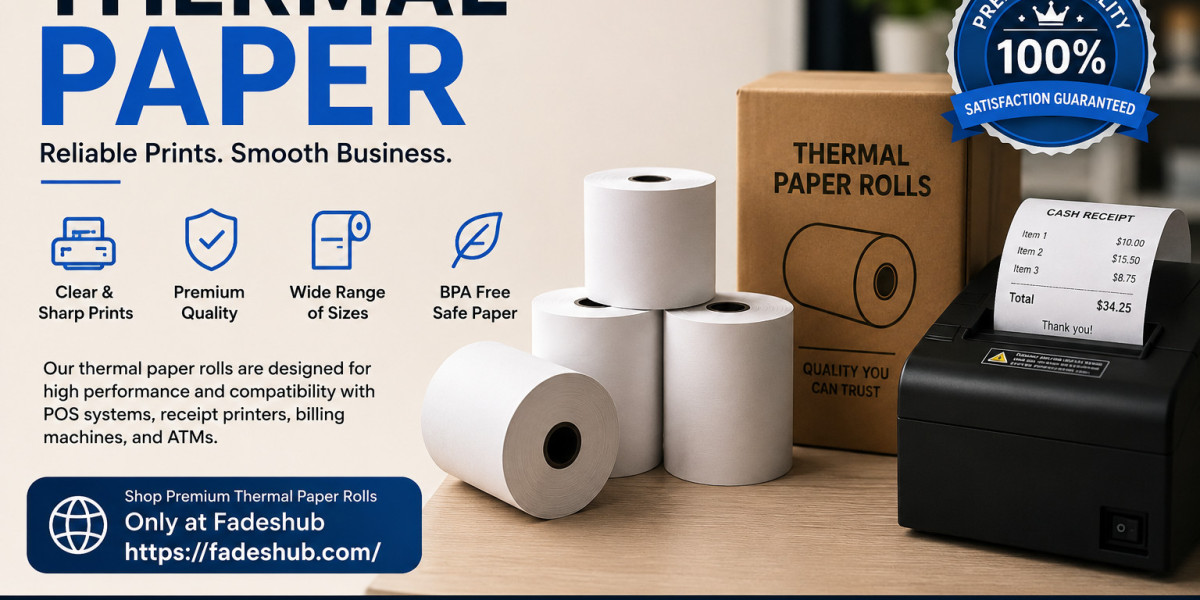

Thermal Paper for Clear Receipts and Efficient Business Printing Needs
Thermal paper has become an important printing material for businesses that need quick, readable, and reliable transaction records. It is widely used in retail stores, restaurants, pharmacies, banks, parking facilities, logistics operations, and point-of-sale environments. Unlike conventional printer paper, thermal paper contains a specially treated surface that reacts to controlled heat, allowing compatible printers to produce text and graphics without conventional ink. This printing method is particularly useful where speed matters. A busy checkout counter, restaurant order station, or payment terminal may produce hundreds of printed records during a working day. Using suitable thermal paper helps these operations continue without the delays associated with traditional ink-based printing.
How Thermal Paper Creates Text Without Traditional Ink
The printing process behind thermal paper is different from standard office printing. A thermal printer contains a heated printhead that moves across the treated surface of the paper. Specific areas receive heat and develop visible marks, creating letters, numbers, barcodes, and simple graphics.
Because the image develops directly on the paper, the printer does not normally require:
Ink cartridges
Toner
Traditional printing ribbons
This straightforward mechanism makes thermal printing convenient for businesses that need frequent short documents.
The Special Coating on Thermal Paper
The surface treatment is what separates thermal paper from ordinary paper. When heat reaches the coating, a chemical reaction produces the visible image. The quality of this coating can influence print sharpness, contrast, and consistency. This is why choosing paper solely according to price may not provide the best result for a business that depends heavily on printed records.
Thermal Paper in Point-of-Sale Transactions
Point-of-sale systems are among the most common environments where thermal paper is used. Retailers need to provide customers with transaction details quickly after payment.
A printed receipt can contain:
Store information
Purchased items
Prices
Taxes
Discounts
Payment details
Transaction numbers
Clear printing makes these details easier for customers and staff to read. It can also help when a receipt is required for an exchange, return, accounting record, or warranty-related purpose.
Retailers Need Consistent Receipt Printing
A checkout system that repeatedly experiences paper feeding problems can slow down customer service. Correctly sized thermal paper helps the printer operate smoothly and reduces unnecessary interruptions.
Thermal Paper Applications Beyond Retail Stores
The usefulness of thermal printing extends well beyond traditional cash registers. Many businesses depend on printed information as part of their everyday workflow.
Restaurants and Cafés
Restaurants can use thermal printers for customer bills, kitchen orders, takeaway receipts, and other transaction records. Fast output is particularly useful when staff need to communicate orders between different areas of the business.
Healthcare and Pharmacy Environments
Thermal printing can be used for receipts, labels, queue information, and other short-form documents where rapid printing is required.
Transport and Parking Services
Parking machines, ticketing systems, and transportation services can use thermal paper to produce tickets and payment records almost instantly.
Delivery and Logistics Operations
Specialised thermal printers are also used for labels and shipment-related information. Clear barcodes and text can help staff identify and process packages efficiently.
Choosing Thermal Paper That Matches Your Printer
Not every thermal paper rolls product fits every machine. Printer specifications should always be checked before purchasing replacement rolls or sheets.
Paper Width and Roll Diameter
Thermal printers support specific dimensions. Width is particularly important because a roll that is too wide may not fit correctly, while an unsuitable diameter can interfere with the printer mechanism.
Core Size
The central core of a roll also matters. Some printers require particular core dimensions, so checking the manufacturer's specifications can prevent compatibility issues.
Print Quality
Paper quality affects how clearly text and barcodes appear. A suitable product should produce consistent marks without unnecessary fading or uneven areas.
Why Compatibility Should Come First
Buying the wrong paper can lead to wasted stock, feeding problems, and inconsistent output. Businesses should identify their printer model and required paper specifications before placing an order.
Paper Quality Can Influence Business Presentation
A receipt is often the physical document a customer receives immediately after completing a purchase. Faded text or poorly printed information can make a business appear less organised.
Quality thermal paper can support:
Sharp text
Clear numbers
Readable barcodes
Consistent contrast
Professional receipt presentation
For businesses handling large transaction volumes, these small details can make a noticeable difference.
Storage Conditions Affect Thermal Paper Performance
Thermal paper is sensitive to environmental conditions because its surface contains heat-reactive materials. Poor storage can affect its ability to produce clear images.
Businesses should protect unused paper from:
Direct sunlight
Excessive heat
High humidity
Strong chemicals
Keeping Stock in Suitable Conditions
Thermal rolls should remain in their original packaging where practical and be stored in a cool, dry environment. Businesses that purchase supplies in bulk should organise inventory so older stock can be used appropriately. Good storage can help preserve paper quality before it reaches the printer.
BPA-Free Thermal Paper and Material Considerations
Businesses increasingly consider the materials used in everyday supplies. BPA-free thermal paper is available for organisations that prefer alternatives to conventional thermal coatings. The choice of paper should take into account printer requirements, intended application, product specifications, and relevant workplace considerations. Rather than choosing a product based only on a label, businesses should review the manufacturer's information and confirm that the paper is suitable for their equipment.
Reducing Printing Interruptions With Better Stock Management
Running out of thermal paper during a busy period can create avoidable problems. Retail counters, restaurants, and payment stations need replacement rolls available when required.
A simple stock routine can involve:
Monitoring average paper consumption.
Keeping compatible replacement rolls available.
Checking inventory before peak periods.
Reordering before supplies become critically low.
This approach helps businesses maintain uninterrupted printing operations.
For further related posts blogs or contents click here
Why Thermal Paper Remains Relevant in a Digital Economy
Digital receipts and electronic payments continue to grow, but physical receipts remain useful in many situations. Customers may need printed proof of purchase, while businesses often require physical records for specific processes. Thermal printing remains attractive because it combines rapid output with relatively simple hardware. Its ability to produce information immediately keeps it relevant across many commercial environments.
Frequently Asked Questions About Thermal Paper
What is thermal paper?
Thermal paper is a specially coated printing material that develops visible text or images when exposed to heat from a compatible thermal printer.
Does thermal paper require ink?
No. Direct thermal printing uses heat-sensitive coating instead of conventional ink or toner.
Where is thermal paper commonly used?
It is commonly used for receipts, tickets, labels, payment records, restaurant orders, and other short printed documents.
How do I know which thermal paper fits my printer?
Check the printer manufacturer's specifications for required width, roll diameter, core size, and paper type.
Why can thermal receipts fade?
Exposure to heat, sunlight, moisture, and certain chemicals can affect the appearance and longevity of thermal prints.
Is BPA-free thermal paper available?
Yes. BPA-free thermal paper options are available, although businesses should still verify the product specifications and printer compatibility before purchasing.