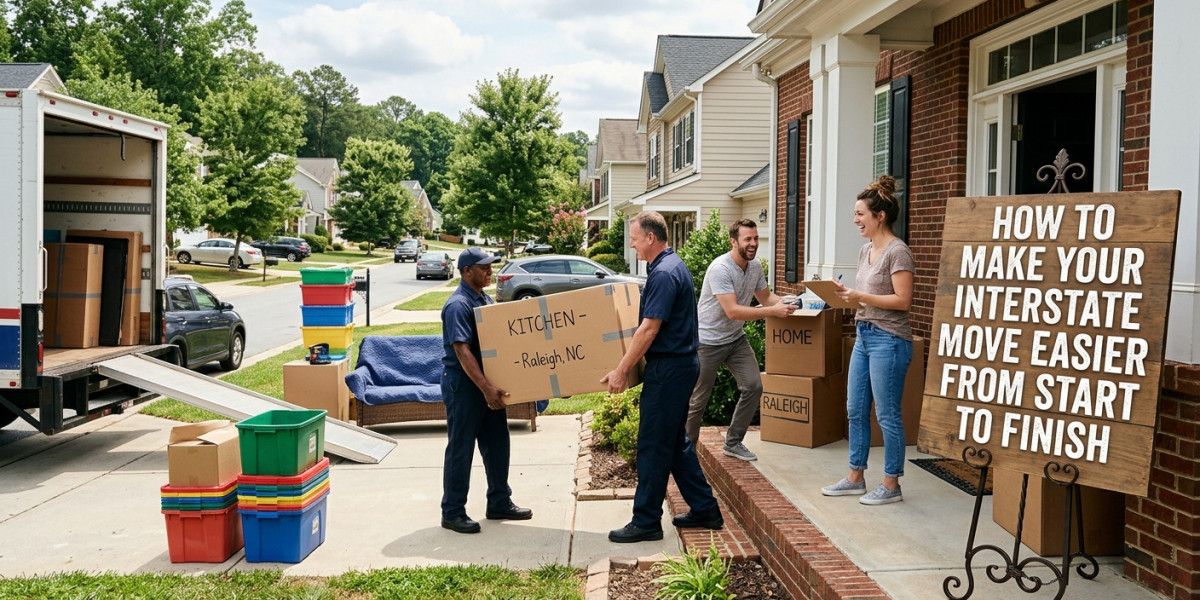

There are budgets to manage, movers to research, belongings to organize, and deadlines to meet.
A well-planned approach can make an interstate move far easier from the first checklist to the final unpacked box.
Start Planning the Move as Early as Possible
One of the biggest advantages a household can give itself is time. Leaving major decisions until the final few weeks can turn manageable tasks into urgent problems.
Planning should ideally begin several weeks before moving day. The exact timeline depends on the size of the household, distance, work commitments, and whether professional movers will handle the relocation.
A basic plan should identify:
The target moving date
An estimated moving budget
Items that will be moved, sold, donated, or discarded
Important documents that need updating
Moving companies that need to be researched
Packing deadlines for each room
Travel arrangements for the household
Utility connection and disconnection dates
Breaking the move into smaller tasks makes it easier to see what needs attention without trying to handle everything at once.
Understand What Makes an Interstate Move Different
A move across state lines is not simply a longer version of a local move. Interstate moving companies operate under federal requirements, and customers should understand those rules before signing an agreement.
For example, interstate household-goods carriers are generally required to register with the Federal Motor Carrier Safety Administration (FMCSA) and obtain a USDOT number. Consumers can use federal records to check whether a carrier has the appropriate operating authority.
This verification matters because a polished website, attractive truck, or low estimate does not prove that a business is properly authorized to transport household goods across state lines.
Moving directories and educational resources can also help consumers understand their options. A resource such as My Moving Journey can be used to research moving-related information and compare options before a household begins contacting companies.
Know the Difference Between a Carrier and a Broker
Customers should also determine whether they are dealing directly with a moving carrier or with a broker.
A carrier physically transports the household goods. A broker generally arranges transportation with another company rather than performing the move itself.
That distinction can affect communication, pricing, scheduling, and who ultimately handles the shipment. Consumers should ask directly who will transport their belongings and verify the companies involved before moving day.
Build a Realistic Interstate Moving Budget
Transportation is only one part of the total cost of moving to another state. A realistic budget should account for expenses before, during, and immediately after the relocation.
Possible costs include:
Moving company charges
Packing materials
Professional packing
Moving insurance or additional valuation coverage
Storage
Fuel and tolls
Flights or hotel stays
Pet transportation
Vehicle shipping
Utility deposits
Cleaning expenses
Temporary accommodation
Meals during travel
Households should also keep a contingency amount available. Unexpected costs can appear when a shipment requires extra handling, access to a property is difficult, or the move takes longer than expected.
Compare Estimates Carefully
Price should never be the only factor used to choose a mover.
A significantly cheaper estimate can look attractive, but consumers need to understand what is actually included. They should compare the services, estimated shipment weight or volume, additional charges, valuation options, pickup arrangements, and delivery terms.
The goal is to compare equivalent services rather than simply choosing the lowest number on the page.
Research Movers Before Signing Anything
A long-distance moving company may handle thousands of dollars' worth of household belongings. Researching the company deserves more than a quick search and a glance at its star rating.
For an interstate move, consumers can check a mover's USDOT information through FMCSA resources. They should also review complaint patterns, company history, contact information, and the details provided in the estimate.
Reviews can provide useful context, but no single review should determine the decision. Patterns are more valuable.
Repeated complaints involving unexpected price increases, delayed deliveries, damaged property, poor communication, or belongings being withheld deserve closer attention.
Get Multiple Written Moving Estimates
Households should request estimates from several qualified companies before making a decision.
A proper estimate gives the customer an opportunity to understand the expected charges and ask questions before the move begins. Consumers should provide accurate information about the belongings being moved because leaving out major items can affect the final cost.
This is also the stage where comparing professional long-distance movers can help a household narrow its options and evaluate companies based on more than price alone.
Before accepting an estimate, the customer should understand:
Whether the estimate is binding or non-binding
Which services are included
How additional charges are calculated
Whether packing is included
Potential fees for stairs or long carries
Storage charges, if applicable
Pickup and delivery expectations
Payment requirements
Any unclear charge should be discussed before the contract is signed.
Declutter Before Packing Begins
Moving unwanted belongings across state lines costs time, space, and often money.
Before buying packing supplies, households should review each room and decide what is actually worth taking. Clothing that has not been worn for years, unused furniture, duplicate kitchenware, and forgotten storage items may not need to make the trip.
A simple four-category system works well:
Keep
Sell
Donate
Discard
Decluttering early also makes unpacking easier. Instead of filling the new home with items that were already unnecessary, the household arrives with belongings it genuinely intends to use.
Pack for Distance, Not Just for Transportation
Interstate shipments can spend considerably more time in transit than local moves. Boxes may be stacked, shifted, transferred, or stored during the journey.
Packing should reflect that reality.
Strong boxes, proper cushioning, quality tape, and careful labeling can reduce the risk of damage. Fragile items should have enough protection to prevent movement inside the box.
Create a Simple Labeling System
Every box should identify both its destination and basic contents.
For example:
Kitchen — Pots and Pans — Box 3
This is much more useful than simply writing "Kitchen."
Numbering boxes can also help households track the shipment. A basic inventory might record that 42 boxes were loaded and list high-value or important items separately.
Keep Essential Items Out of the Moving Truck
Some belongings should remain with the household rather than being packed into the shipment.
These may include:
Identification documents
Passports
Financial records
Prescription medications
Important legal documents
Phones and chargers
Laptops
Keys
Jewelry
Essential children's items
Pet supplies
Clothing for several days
Interstate delivery does not always happen at the same time the customer arrives at the destination. An essentials bag helps the household function comfortably while waiting for the rest of the shipment.
Protect Important Documents and Records
Crossing state lines often requires administrative changes that can easily be forgotten during the physical move.
Depending on the situation, a household may need to update its:
Mailing address
Driver's license
Vehicle registration
Voter registration
Insurance information
Banking address
Employer records
School records
Medical providers
Subscription services
Requirements and deadlines vary by state, particularly for driver's licenses and vehicle registration. New residents should check the official state agencies responsible for those requirements rather than relying on assumptions from a previous state.
Keeping digital copies of important documents in secure storage can also be useful if physical paperwork is temporarily misplaced.
Prepare for Moving Day Before the Truck Arrives
Moving day should be mostly about execution, not last-minute decision-making.
Boxes should be packed and labeled, important documents should be separated, and any items that are not supposed to go on the truck should be clearly identified.
Before loading begins, customers should review the paperwork carefully. They should not sign blank or incomplete documents and should keep copies of contracts, estimates, inventories, receipts, and other moving records.
It can also be useful to photograph valuable belongings and the general condition of furniture before loading.
Review the Inventory
When a mover provides an inventory or descriptive list of household goods, the customer should review it before signing.
Any existing damage recorded by the mover should be checked for accuracy. Customers should also confirm that major items have been listed.
Good documentation can become particularly important if a damage or loss claim is necessary later.
Plan for the Delivery Window
Interstate moves often operate differently from short local relocations where belongings arrive a few hours after departure.
Depending on distance, scheduling, shipment arrangements, and the moving contract, delivery may occur within a window rather than at one exact time.
Households should ask about the delivery process before booking and make temporary arrangements if necessary.
The customer should also make sure the mover has current contact information throughout the trip. If phone numbers, destination details, or access instructions change, the company should be informed promptly.
Inspect Belongings During Delivery
The move is not finished when the truck reaches the destination.
As belongings are unloaded, the household should watch for missing boxes and visible damage. Numbered boxes and an inventory list make this process easier.
Large furniture should also be inspected before the moving crew leaves when practical.
If something appears damaged or missing, customers should document the problem with photographs and written notes. They should then review the mover's claims procedure and applicable deadlines.
Keeping contracts, receipts, inventories, photographs, and communication records together makes any later claim easier to support.
Unpack in a Practical Order
Trying to unpack the entire house immediately can create unnecessary stress.
The first priority should be making the home functional.
A practical order is:
Essential toiletries and medications
Beds and bedding
Basic kitchen supplies
Children's or pets' necessities
Work equipment
Everyday clothing
Remaining household items
Decorative and nonessential belongings
Room-specific labels make this stage much faster because boxes can be placed in their final rooms during unloading rather than piled together in one area.
Give the Household Time to Settle In
An interstate relocation does not end when every box is opened.
There may still be address changes, vehicle paperwork, school enrollment, healthcare arrangements, utility issues, and other tasks to complete. Trying to resolve everything in the first few days can make the transition harder than necessary.
A post-move checklist allows these responsibilities to be handled according to priority.
It also gives the household time to learn the new area, establish routines, and deal with any outstanding moving-company matters without losing important records.
Final Thoughts
An easier interstate move usually comes from preparation rather than luck. Early planning, careful mover verification, realistic budgeting, organized packing, and thorough documentation can prevent many common problems.
Consumers should understand the companies they hire, read moving documents carefully, and keep important belongings and records accessible throughout the relocation.
With each stage handled deliberately—from the first estimate to the final box—the move becomes less about reacting to problems and more about completing a well-organized transition to a new home.