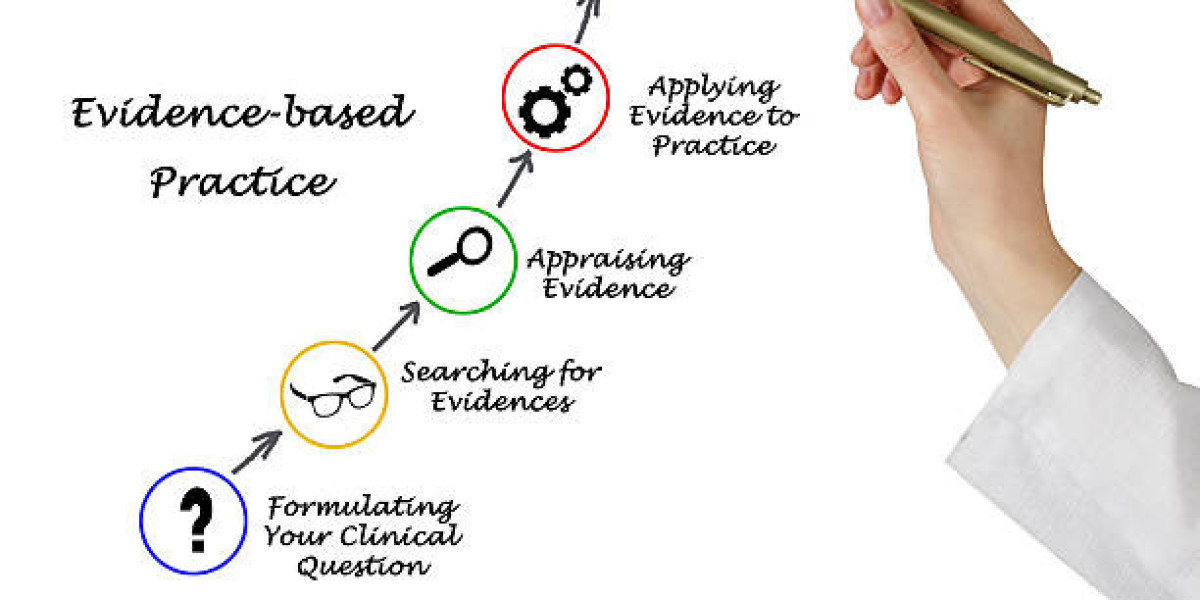

Reading an academic paper is easy. Deciding how much you should trust it is harder.
A journal article can look convincing because it has an impressive title, a long reference list, statistical tables, and the name of a respected university or research institution attached to it. None of those things, by themselves, tell you whether the research is strong.
When I evaluate academic research, I try to look past the presentation and concentrate on the evidence. Who was studied? What exactly did the researchers investigate? How did they collect their information? Could something else explain the results? And, perhaps most importantly, do the conclusions actually follow from the evidence?
That is what critical evaluation of research is really about. It is not about attacking a study or searching for faults simply because an assignment asks you to be "critical." It means making a reasoned judgement about the strengths, weaknesses, relevance and reliability of the evidence.
Universities commonly make the same distinction. Critical reading involves examining how well evidence supports an author's claims rather than simply accepting those claims at face value.
Start With the Research Question
Before looking at the results, I first want to know what the researchers were actually trying to find out.
A vague research question makes everything that follows more difficult to judge. A well-defined question should give you some idea of the population being studied, the issue being investigated and the type of relationship or experience the researchers want to understand.
For example, imagine a study asking whether flexible working improves employee wellbeing.
That sounds straightforward, but several questions immediately arise. What does "flexible working" mean in this study? Is it working from home, choosing working hours, compressed hours, or something else? How is wellbeing measured? Are researchers interested in a relationship between the two variables, or are they claiming that flexible working causes better wellbeing?
Those distinctions matter.
A useful first step is therefore to rewrite the research question in your own words. If you cannot explain what the researchers were investigating without repeatedly returning to the abstract, you probably need to read the paper more carefully before judging it.
Look at the Research Design
The next question is whether the researchers chose a suitable method.
Different research questions require different approaches. A survey might be useful for finding out how common a particular opinion is, while interviews could provide much richer information about why people hold that opinion. A randomized experiment may be appropriate when researchers want to investigate causation, whereas an observational study may be more realistic for questions that cannot ethically or practically be tested experimentally.
The important point is not to assume that one method is automatically superior.
Instead, ask whether the method fits the question.
For example, suppose researchers survey employees once and discover that people who work remotely report higher job satisfaction. The survey may provide useful evidence of an association. It cannot, on its own, establish that working remotely caused the higher satisfaction.
There could be other explanations. Perhaps remote workers have greater autonomy. Perhaps their employers offer better benefits. Maybe employees who already prefer working independently are more likely to choose remote positions.
Good critical evaluation considers these possibilities rather than stopping at the headline finding.
Examine the Sample Carefully
A study's participants can tell you a great deal about how widely its findings can be applied.
Start by asking who took part.
Look at the sample size, recruitment method, inclusion criteria and characteristics of the participants. If the research involved a survey, it is also worth considering how many people were invited compared with how many actually responded.
Imagine that a researcher surveys 100 business students at one university and then concludes that university students generally prefer a particular style of leadership.
That conclusion may be too broad.
The students might differ from students at other universities. They might have similar academic backgrounds, live in the same region, or share characteristics that are unusual outside that particular institution.
A small sample is not automatically a fatal weakness. Nor does a large sample guarantee a high-quality study. What matters is whether the participants provide a sensible basis for the claims the researchers make.
Identify Possible Bias
Bias is one of the areas I pay particular attention to because it can influence a study without being obvious at first.
Selection bias can occur when the people included in a study differ systematically from those who were not included. Measurement bias can arise when the way information is collected produces inaccurate or distorted results. Researchers can also face problems involving recall, observation, reporting or participant dropout.
Consider an employee survey about workplace stress. If the people experiencing the highest levels of stress are also the least likely to complete the questionnaire, the final results may give a misleading picture of the organisation.
You should also think about the researchers themselves.
Who funded the study? Do the authors have a professional or financial interest in the subject? Have potential conflicts of interest been disclosed?
A conflict of interest does not automatically make research invalid. It simply gives you another reason to examine the methodology and evidence carefully.
The Open University recommends considering factors such as provenance, objectivity, method, relevance and timeliness when evaluating research and information.
Check How the Researchers Measured Things
Some research concepts are easy to measure. Others are not.
Age, income and number of employees, for example, can usually be recorded relatively directly. Concepts such as job satisfaction, motivation, leadership quality, trust and organisational culture are more complicated.
Researchers therefore need to define what they mean and explain how they measured it.
If a study claims to measure "employee engagement," I would want to know what questions participants were asked and whether the measurement approach has been tested or used in previous research.
This is important because a researcher can reach a perfectly precise statistical answer to the wrong measurement.
In other words, impressive numbers do not compensate for a poorly defined variable.
Don't Stop at the P-Value
Statistics can make a paper appear more authoritative than it really is.
One of the most common mistakes is to treat statistical significance as though it automatically means that a finding is important.
It does not.
A statistically significant result may represent a very small effect. Conversely, a study with a small sample may fail to produce statistical significance even when the underlying effect deserves further investigation.
When possible, look for the size of the effect and the uncertainty surrounding it. Confidence intervals can be particularly useful because they provide more information than a simple statement that a result was or was not statistically significant.
The American Statistical Association has specifically cautioned against treating a p-value as a measure of the size or importance of a result.
So if an article says that a particular management intervention "significantly improved performance," don't stop there.
Ask: By how much?
A two-percent improvement and a fifty-percent improvement are very different findings, even if both happen to be statistically significant.
Separate Association From Causation
This is one of the most important habits you can develop as a critical reader.
Two variables can be related without one causing the other.
Suppose researchers discover that employees who exercise regularly report lower stress levels. It would be tempting to conclude that exercise reduces stress.
But there may be another explanation. People with better access to leisure time may both exercise more and experience less workplace stress. Income, age, working hours, physical health or other factors could also play a role.
This is why the wording used by researchers matters.
Words such as "associated with," "related to" and "correlated with" are not interchangeable with "causes."
Whenever you encounter a causal claim, ask what evidence justifies it.
Compare the Findings With Other Research
A single academic paper rarely provides the final answer to a complicated question.
Once you understand a study, compare it with other credible research.
Do other researchers reach similar conclusions? Are there disagreements? Do larger studies produce different results? Do systematic reviews provide a broader picture?
This process is particularly important when the original article makes a strong claim.
For example, imagine one small study reports that a particular leadership style dramatically increases employee productivity. Before accepting that conclusion, I would search for other studies examining the same relationship.
If several independent studies find similar effects, confidence in the overall evidence may increase. If the findings vary considerably, that disagreement becomes part of the story.
The University of Bristol similarly recommends comparing multiple perspectives and looking beyond a single source when evaluating information.
Read the Limitations Then Think Beyond Them
Most good research papers include a limitations section.
Read it, but don't treat it as the final word.
Researchers might acknowledge that their study used a relatively small sample or was conducted in one organisation. You should then consider what that limitation means for the conclusions.
For example, a study conducted in one technology company might provide useful insight into that company's employees. It does not necessarily tell us how employees in hospitals, schools, factories and government departments would respond to the same conditions.
A limitation matters when it changes how confidently you can interpret or generalise the results.
This is an important distinction. Critical analysis does not mean collecting as many weaknesses as possible. It means identifying weaknesses that actually matter.
Check Whether the Conclusions Match the Evidence
This is often the point at which I find the biggest gap between a paper's results and its claims.
Researchers sometimes present cautious findings in the results section and then use stronger language in the discussion or conclusion.
Suppose the study finds a relationship between two variables. If the conclusion says that one variable "causes" the other, ask whether the research design can support that statement.
You should also watch for overgeneralisation.
A finding involving a particular group, location or time period should not automatically be presented as universal.
The University of Wollongong's guidance on critical analysis makes a similar point: students should consider whether conclusions are soundly based on findings or go too far through overgeneralisation.
Evaluate the Source as Well as the Study
There are really two related questions here.
First, is the research itself convincing?
Second, is this particular source appropriate for your purpose?
Look at the author's expertise, the publication venue, publication date, references and editorial or peer-review process. Consider whether the source is relevant to your specific research question rather than merely being about the same general subject.
For current topics, publication date can matter considerably. For established theories, an older influential paper may still be essential.
The University of Nevada, Reno also recommends checking an author's expertise, investigating the source itself and looking for independent coverage that can verify or challenge its claims.
That last point is especially useful when researching online. Don't assume that an academic-looking webpage is reliable simply because it uses formal language.
Turn Your Evaluation Into Analysis
Once you've finished reading the research, the next challenge is explaining your judgement clearly.
A weak evaluation might say:
The researchers used a small sample and there were some limitations.
That statement does not tell the reader much.
A stronger version explains why the issue matters:
The study provides useful evidence about the relationship between flexible working and employee satisfaction, but the relatively narrow sample limits how confidently the findings can be applied to employees in other industries. The cross-sectional design also makes it difficult to determine whether flexible working produced the reported differences in satisfaction.
The difference is important.
The second example connects the methodological issue to its consequence. That is what makes it analysis rather than description.
The University of Portsmouth describes critical writing in similar terms: effective academic analysis explains why evidence matters and considers the strengths and limitations of the research being used.
If you're working on a management assignment, this is also the point where outside academic support can be useful not to replace your own judgement, but to help you understand whether your discussion is genuinely analytical. For students looking for assistance with research-heavy management coursework, management assignment help online is one possible source of additional support.
A Practical Five-Question Test
When I need to assess a paper quickly, I reduce the process to five questions:
1. What is the author claiming?
State the main argument in your own words.
2. What evidence supports it?
Identify the data, observations or analysis on which the claim depends.
3. What could weaken the argument?
Look for problems with the sample, methodology, measurements, bias, confounding or analysis.
4. Does other research agree?
Compare the study with credible research rather than judging it in isolation.
5. How confident should I be?
Your final judgement should reflect the strength of the evidence.
This last question is particularly important. Research does not always give us a simple "true" or "false" answer. Sometimes the most defensible conclusion is that the evidence is promising but limited, consistent but not conclusive, or useful in one context but difficult to generalise.
Common Mistakes to Avoid
A few habits can make critical evaluation weaker than it appears.
Assuming peer review makes research infallible
Peer review is valuable, but published research can still contain methodological weaknesses, questionable interpretations or limitations.
Treating sample size as the only measure of quality
A large sample can still be unrepresentative. A smaller study can sometimes provide valuable evidence when its design and purpose are appropriate.
Focusing only on weaknesses
Critical thinking includes recognising strengths. A fair evaluation should acknowledge what the researchers did well as well as what could be improved.
Listing limitations without explaining them
Simply identifying a limitation is not enough. Explain how it affects the credibility, interpretation or generalisability of the findings.
Confusing a correlation with a cause
Always check whether the research design can justify a causal conclusion.
Relying on one article
Research becomes much easier to evaluate when you can compare competing findings and approaches.
Final Thoughts
Learning to evaluate academic research takes practice. At first, it can feel as though every paper requires you to become an expert in statistics, research design and methodology. You don't need to know everything.
You do need to develop the habit of asking sensible questions.
Who was studied? What was actually measured? Why was this method chosen? Could there be another explanation? How strong is the evidence? Do other researchers agree? And does the conclusion stay within the limits of the data?
The strongest critical evaluations are not the ones that attack a paper most aggressively. They are the ones that make a balanced judgement and explain why that judgement is justified.
In the end, critical reading is about knowing how much weight a piece of evidence deserves.
That skill is useful far beyond university. It helps you judge research, question confident claims, recognise uncertainty and make better decisions whenever someone tells you that the evidence "proves" something.