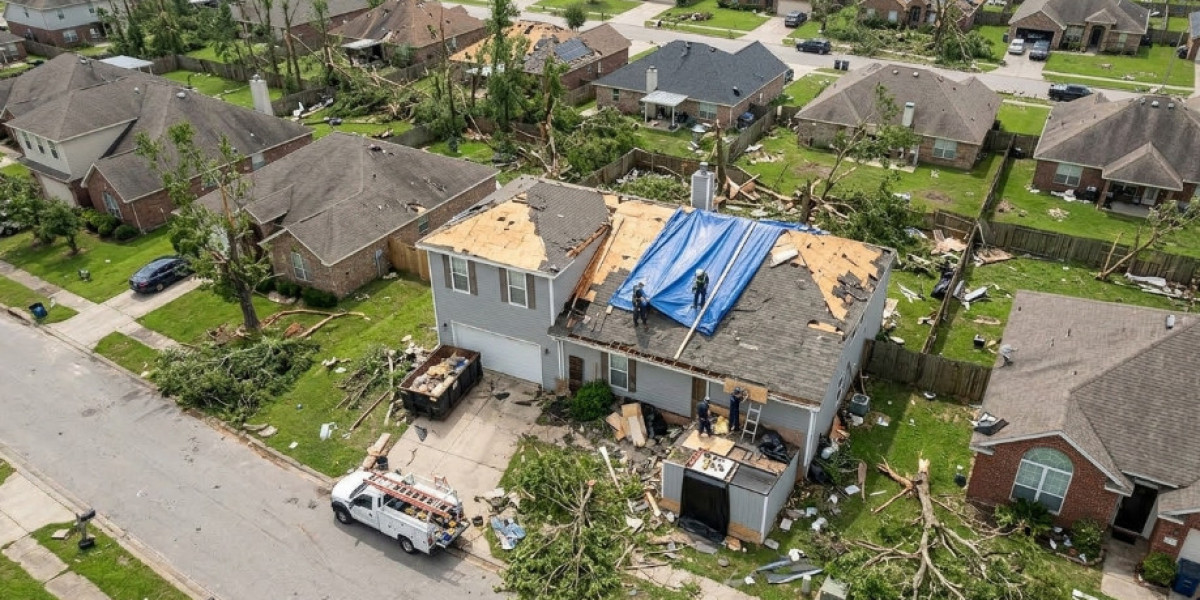

High winds can leave behind damage that isn't obvious from the ground. A roof may look fine while shingles have loosened underneath, or siding may appear intact even though sections have started pulling away from the wall.
After a severe wind event, a quick visual check can help identify problems before they become more expensive. The key is knowing where wind usually causes trouble and what small signs deserve closer attention.
Start With the Roof and Upper Exterior
The roof usually takes the first hit because it is directly exposed to strong gusts and flying debris. Wind damage restoration often begins with a careful assessment of these exposed areas, especially where materials may have shifted without completely falling off.
Look for missing or lifted shingles
Walk around the property and look for shingles that are missing, raised, curled, cracked, or sitting at an unusual angle. Even a small lifted section can allow wind-driven rain to reach the underlayment or roof deck.
Don't assume that one missing shingle means the rest of the roof is fine. Nearby shingles may also have weakened edges or loose fasteners that aren't easy to notice from the ground.
Check roof edges and flashing
Roof edges, ridges, valleys, and flashing areas can be vulnerable during strong gusts. These sections experience changes in wind pressure and may loosen before damage becomes obvious inside the building.
Look for bent metal, separated flashing, exposed fasteners, or gaps around roof penetrations. These openings can become entry points for water during the next rainfall.
Inspect gutters and downspouts
Strong winds can bend gutters, pull them away from fascia boards, or fill them with broken roof materials and debris. Downspouts can also become disconnected or shifted out of position.
Check whether water can still move away from the roof properly. A damaged drainage system can create another problem even when the original wind damage seems minor.
Examine Walls, Siding, Windows, and Doors
Wind can affect much more than the roof. Wind Damage Restoration may also involve exterior surfaces where pressure, debris, and sudden movement have caused hidden weaknesses.
Check siding for movement or gaps
Look for cracked siding, loose panels, open seams, or sections that no longer sit flat against the wall. Vinyl and other lightweight materials can sometimes separate at connection points after strong gusts.
Pay particular attention to corners and areas around windows and doors. Gaps in these locations can allow moisture to enter behind the exterior covering.
Inspect windows for cracks and damaged seals
Flying branches, loose objects, or rapid pressure changes can damage window glass and frames. Even when the glass remains intact, seals or surrounding trim may be affected.
Look for cracks, broken glazing, damaged screens, or spaces around the frame. Water stains or dampness near a window after a storm can indicate that the exterior seal has been compromised.
Check exterior doors and their frames
A strong gust can place unusual pressure on doors, hinges, locks, and frames. A door that suddenly sticks, won't close properly, or has visible gaps may have suffered movement or frame damage.
Check the threshold and surrounding trim as well. Small openings can let wind-driven rain reach areas that normally stay dry.
Look for Signs of Wind-Driven Water
Wind and rain often work together during a storm. Water can reach places it normally wouldn't because strong gusts push it through small openings in the exterior.
Inspect ceilings and upper walls
After heavy wind and rain, check ceilings and upper walls for stains, discoloration, bubbling paint, or damp spots. These signs can appear even when the roof damage isn't visible from outside.
A new stain should be taken seriously, particularly when it appears near roof lines, skylights, vents, chimneys, or attic spaces.
Check attic areas when safe
The attic can reveal problems that aren't visible from the living space. Look for damp insulation, water marks, damaged wood, or daylight entering through areas that should be sealed.
Be cautious around electrical wiring and unstable surfaces. A storm-damaged attic may have hazards that aren't immediately visible.
Watch for wet insulation and wood
Insulation can absorb or hold moisture after a roof breach. Wooden framing can also become damp when water enters through damaged roofing materials.
These materials may not show obvious problems from the rooms below, so signs in the attic can help explain later stains, odors, or deterioration.
Don't Overlook Trees, Fences, and Loose Structures
Wind damage isn't limited to the main building. Objects around the property can create secondary damage when they are pushed over, lifted, or thrown against the structure.
Check nearby trees and branches
Look for broken limbs, leaning trees, cracked trunks, and branches resting on roofs or utility lines. Even a branch that appears stable can become dangerous after its structure has been weakened.
Trees close to buildings deserve particular attention because they can cause roof, siding, window, and gutter damage.
Inspect fences and gates
Fence panels, posts, and gates can loosen or break during high winds. A damaged fence can also leave parts of the property exposed to further wind or debris.
Look for leaning sections, split posts, missing boards, and loose hardware. These signs may indicate that the wind was strong enough to affect other exterior connections as well.
Check sheds and attached structures
Garages, sheds, awnings, carports, and similar structures can experience significant wind pressure. Look for shifted roofing, damaged panels, loose doors, and separated connections.
Don't ignore smaller detached structures simply because the main building looks intact. A damaged outbuilding may contain debris or create additional safety concerns.
Inspect for Hidden Structural Problems
Some of the most serious wind damage isn't immediately visible. Strong gusts can place stress on connections and building components without causing dramatic surface damage.
Look for new cracks
Check interior and exterior walls for cracks that weren't present before the storm. Pay attention to areas around windows, doors, corners, and ceiling joints.
Not every crack indicates structural damage, but a sudden change after a major wind event is worth documenting and evaluating.
Watch for shifted materials
Changes in the position of roof lines, siding, trim, gutters, or exterior fixtures can indicate that connections have moved under wind pressure.
Compare suspicious areas with nearby sections that appear normal. Uneven lines and newly opened gaps can be useful clues.
Notice doors that suddenly stick
A door that worked normally before the storm but now rubs, sticks, or won't close properly may indicate movement in the frame or surrounding structure.
This doesn't automatically mean the building has serious structural damage. It does mean the change shouldn't be ignored, especially when other signs appeared at the same time.
What to Do When You Find Damage
Once damage is identified, avoid making the situation worse by rushing into repairs. Start by documenting what you see and keeping people away from unsafe areas.
Photograph the visible damage
Take clear photos of damaged roofing, siding, windows, gutters, trees, fences, and interior staining. Capture both close-up details and wider views that show where the damage is located.
Good documentation can make it easier to explain what happened and compare conditions during later inspections.
Keep clear of dangerous areas
Stay away from unstable trees, damaged roofs, hanging materials, broken glass, and areas with exposed electrical components. Wind can leave structures weakened even when they appear stable.
Safety should come before investigating hard-to-reach locations. Ground-level observations are often enough to identify areas that need professional attention.
Protect the property from further exposure
When safe and appropriate, temporary measures may help limit additional rain or debris from entering the building. However, unsafe roof access or electrical work should never be attempted without proper knowledge and equipment.
The priority is to prevent additional damage while the affected areas are being evaluated.
Why a Careful Post-Storm Check Matters
Wind damage doesn't always announce itself with a dramatic collapse. Loose shingles, small openings, bent flashing, damaged seals, and weakened connections can become much more serious when the next storm arrives.
A careful check helps identify these weak points while the damage is still fresh. It also gives property owners a clearer picture of what needs attention rather than relying only on what can be seen from a driveway.
The most useful inspection is one that connects outside damage with possible problems inside. When those signs are considered together, it becomes easier to understand how the wind affected the property and where hidden issues may be developing.
Conclusion
After high winds, don't judge the condition of a property by appearance alone. Check the roof, exterior walls, openings, attic, drainage components, nearby trees, and interior areas for changes that weren't there before the storm.
Wind can loosen materials without removing them completely, and water can enter through openings that are only a few inches wide. A careful inspection helps catch those problems early, before repeated exposure turns a minor weakness into major damage.
Understanding wind load can also explain why different parts of a building experience different levels of pressure during strong gusts. This helps put seemingly small exterior changes into context and reinforces why post-storm checks should cover the whole property.