
A well-organised shop is easier to manage and more comfortable for customers to browse. One of the simplest ways to create a practical retail environment is to choose the right shop shelving. From displaying everyday products to making better use of available floor space, suitable shelving can support many parts of a shop's daily operation.
Retail shelving isn't just about putting products on shelves. The right system can help create clear product sections, improve stock organisation, make displays easier to maintain, and give a store a more structured appearance. Whether you're fitting out a small convenience store or updating a larger retail space, shelving should be chosen around the products, premises, and customer flow.
Why Is Shop Shelving Important for Retail Stores?
Retailers need to make the most of the space they already have. Empty walls, awkward corners, and poorly planned floor areas can limit how much stock can be displayed.
Shop shelving helps turn these areas into useful product displays. Shelves can be positioned along walls or arranged in the centre of a store to create organised aisles.
A practical shelving system can help retailers:
Display more products within available space
Keep similar products together
Make stock easier to find
Create clear shopping sections
Simplify restocking
Maintain a tidy shop floor
Improve product accessibility
When shelving is planned properly, customers can browse without feeling overwhelmed by a cluttered layout.
What Types of Shop Shelving Can Retailers Choose?
Different stores have different needs, so there's no single shelving style that suits every business.
What Is Gondola Shop Shelving?
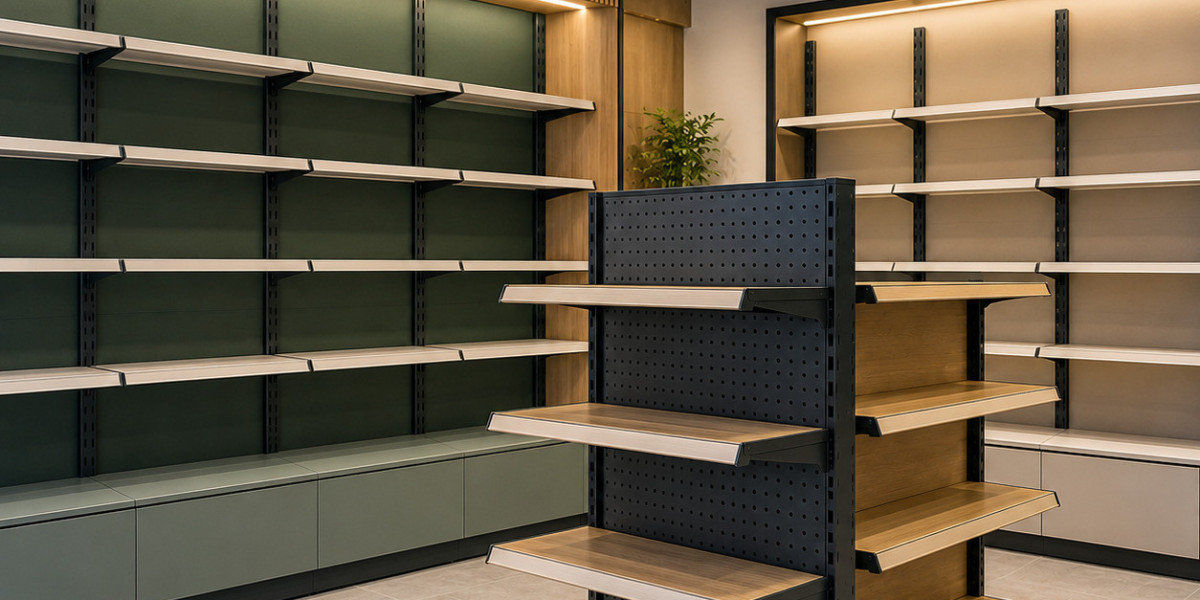
Gondola shelving is a popular retail solution used to create product displays and shopping aisles. It can be configured as single-sided or double-sided shelving.
Single-sided units are often placed against walls, while double-sided units can stand in the centre of a shop and display products from both sides.
Because shelf levels can usually be adjusted, gondola shelving can accommodate products of different heights and sizes.
Why Is Wall Shop Shelving Useful?
Wall shelving helps retailers make use of vertical space. This can be particularly useful in smaller shops where floor area is limited.
Rather than leaving walls empty, businesses can use them for additional product displays. Wall shelving can also create a consistent appearance around the perimeter of a store.
It can be combined with freestanding shelving to create more display capacity without making the shop floor unnecessarily crowded.
When Should Retailers Use Double-Sided Shelving?
Double-sided shelving is useful when retailers want to create central aisles. Products can be displayed on both sides, making the available floor area more productive.
This type of shelving is commonly suited to supermarkets, convenience stores, hardware shops, and other businesses with a broad product range.
How Does Shop Shelving Help Organise Products?
Product organisation becomes much easier when each category has a defined area.
For example, a convenience shop might use separate shelving sections for snacks, drinks, household goods, toiletries, and packaged foods.
Clear categories help customers find products without having to search through unrelated displays. They also make it easier for employees to identify where stock belongs when replenishing shelves.
A consistent arrangement can save time and help the shop remain presentable throughout the day.
Can Adjustable Shelves Make Retail Displays More Flexible?
Yes. Product ranges can change, and fixed shelf spacing doesn't always provide enough flexibility.
Adjustable shelves allow retailers to change the distance between levels according to the products being displayed. Smaller products can be arranged efficiently without leaving excessive gaps, while taller products can be given more vertical space.
This flexibility can be especially useful for retailers that introduce seasonal items or regularly change their stock selection.
How Can Shop Shelving Make Better Use of Small Spaces?
Space is often one of the biggest challenges for smaller retailers. Every section of the shop needs to serve a purpose without restricting customer movement.
Wall shelving can use vertical areas that would otherwise remain empty. Compact shelving runs can also fit into narrower sections, while carefully selected gondola units can create central displays.
The aim should be to increase useful display space while leaving comfortable routes through the store.
A crowded shop may technically hold more stock, but if customers can't move around easily, the layout can work against the business.
What Should Retailers Consider When Choosing Shop Shelving?
Before buying shelving, retailers should look at more than the appearance of the units.
How Much Space Is Available?
Measure the walls, floor areas, ceiling height, and intended aisle widths. Accurate measurements can prevent problems during installation.
What Products Will Be Displayed?
Consider the size and weight of the products. Small packaged goods may need different shelf spacing from large boxes, bottles, or heavy items.
How Much Stock Needs to Be Held?
Think about how much stock should be displayed at one time and how frequently shelves will be replenished.
Will the Product Range Change?
If products change regularly, adjustable shelving can provide greater flexibility and reduce the need for future alterations.
How Will Customers Move Around the Store?
Shelving should support a natural customer route. Avoid creating unnecessarily narrow or difficult-to-navigate areas.
Can Shop Shelving Improve Stock Management?
A good shelving layout can make stock management much simpler. When every product category has a designated location, staff can identify missing items quickly.
It also becomes easier to spot empty shelves and replenish stock before displays look incomplete.
Retail shelving can support a simple first-in, first-out arrangement where appropriate, helping staff keep products organised and easier to manage.
For busy stores, these small improvements can make a noticeable difference to everyday operations.
How Does Retail Shelving Affect Product Visibility?
Product visibility is another important consideration. Shelves should allow customers to see products clearly without unnecessary obstruction.
Appropriate shelf heights can help keep products within easy reach. Consistent spacing can also prevent displays from looking overcrowded.
Retailers should avoid filling every available centimetre simply because there's space. A balanced display can be easier to browse and maintain.
Is Shop Shelving Suitable for Different Types of Retail Businesses?
Yes. Shop shelving can be adapted for many retail environments.
Convenience stores may use shelving for packaged foods, drinks, and household essentials. Supermarkets can use longer shelving runs to organise larger product ranges.
Hardware shops may require stronger shelving for heavier products, while pharmacies and specialist retailers may need a more structured arrangement for smaller items.
The important thing is to match the shelving system to the store's specific requirements.
How Can Retailers Combine Different Shelving Solutions?
Retailers don't necessarily need to use one shelving style throughout the entire premises.
A store might use wall shelving around the perimeter, double-sided gondola shelving through the centre, and smaller display units in selected areas.
Combining shelving types can help make better use of different spaces. It also allows retailers to create dedicated sections for particular product categories.
The overall layout should remain consistent, though, so the shop doesn't feel disjointed.
What Makes Shop Shelving a Long-Term Retail Solution?
Good-quality shelving can become a dependable part of a retail store's infrastructure. Once installed, it can support product displays, stock management, and store organisation day after day.
Adjustable configurations can also make the system useful as the business changes. Instead of redesigning the entire shop whenever the product range changes, retailers can often modify shelf positions and display arrangements.
This makes shop shelving a practical investment for businesses that want a flexible retail environment.
Why Should Retailers Plan Their Shelving Layout Carefully?
The best shelving system can still perform poorly if it's arranged without considering the shop layout.
Before installation, retailers should think about product categories, customer movement, staff access, stock replenishment, and available space.
A little planning goes a long way. By considering how the store operates from opening time through to closing, retailers can choose shelving that supports both customers and staff.
How Can the Right Shop Shelving Create a Better Retail Environment?
The right shelving can bring structure to a retail space. It provides dedicated areas for products, makes stock easier to organise, and helps customers move through the store.
Whether a business needs wall shelving, gondola units, adjustable retail shelving, or a combination of different systems, the best solution is one that fits the store's products and available space.
Ultimately, shop shelving should do more than hold merchandise. It should help retailers make sensible use of space, maintain organised displays, simplify stock management, and create a shopping environment that's practical from every angle. Read more: Double Sided Gondola Shelving